The Game of Death

If you look up the ancient Egyptian board game Senet, you will find articles and essays referring to it as “board game of death” – as though that is the translation of “senet” (it is not – senet means “passing” or “afternoon”) or that the phrase “board game of death” is something we all know exists, but, like dark matter or bigfoot, we just haven’t seen it yet.

The game of death, but no die

Senet, starting around 5000 BCE, spent many years not being the “board game of death”, but rather just the board game. In fact, archaeologists think it was about 2,500 years into it’s life when it took on a religious significance and a connection to the afterlife. Unlike a Ouiji board, senet was a game – you didn’t need an afterlife or spirits to enjoy it. And unlike Tarot, which evolved from game to fortune telling, senet seems to have never stopped being a game, even if people stopped seeing it that way. Senet is not a really a fun friend who can also contact the dead, instead it’s more akin to a seventy year old man having a religious experience and then suddenly THAT’S his whole identity.
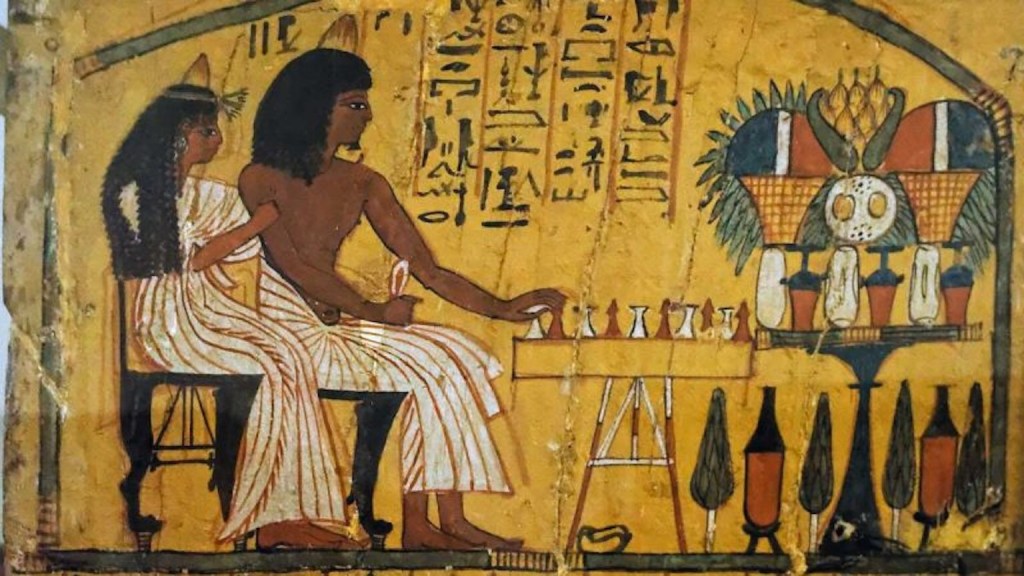
Board to death?

We also don’t quite know the rules, regardless of whether one is playing for fun or, I don’t know, soul (ka)? The vibe is backgammon-y, but there are some specifics we don’t know. Like, “what does the square with squiggly lines mean?” and “Do I play with or against my dead relatives?”
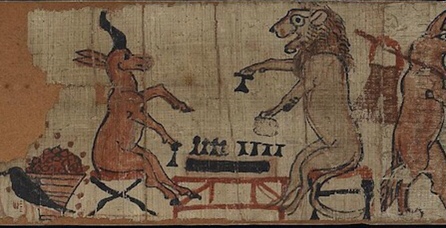
The game of death is for everybody!

Ancient Egypt was a world where religion and social life and culture were all intertwined, so maybe it isn’t so surprising that there is such overlap of the spiritual and the social. Is America ready for a ghost-hunter / poker tournament reality show? I’m thinking yes. Scared Straight, perhaps?
Misunderstood Fortune

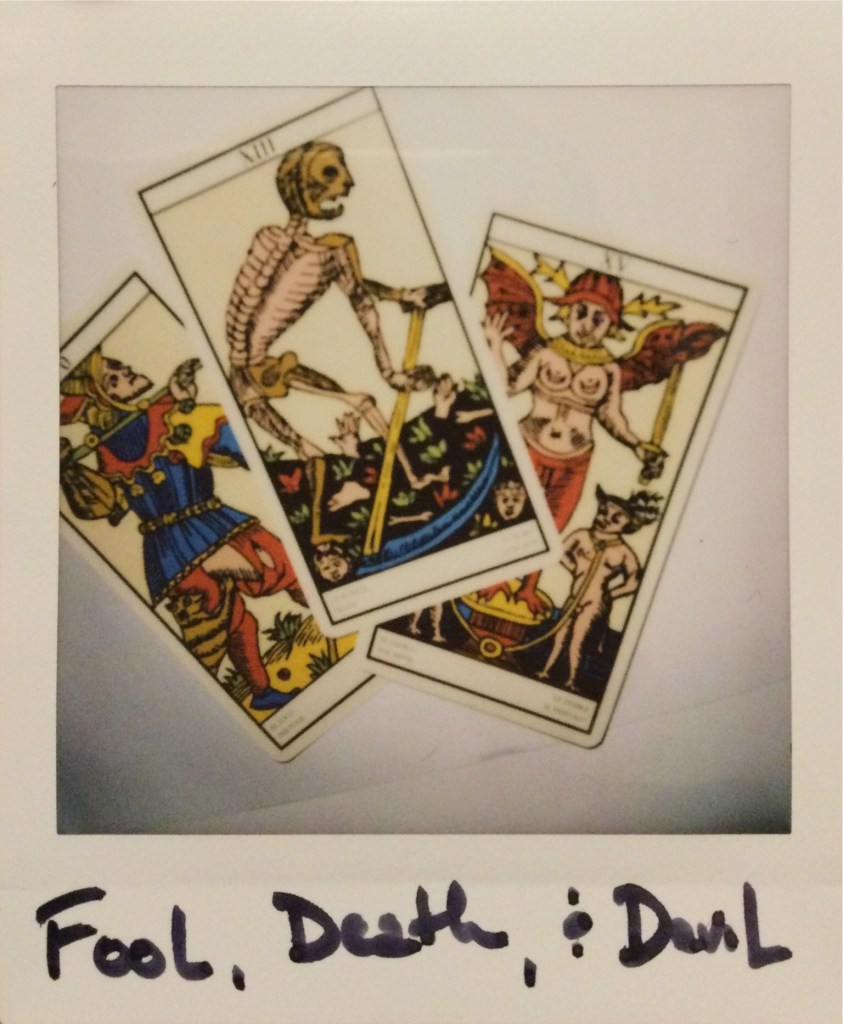
Talk to anyone who knows anything about divination, and you’ll hear that death gets a bad rap. In dreams, in omens, in Tarot – Death doesn’t mean Death (hoping you’ll breathe easy).

You can find many novice guides to the tarot talking about misunderstood cards, particularly the Fool (who, being a fool, has to be misunderstood), the Devil (I mean, evil, hard to spin that one), and Death.

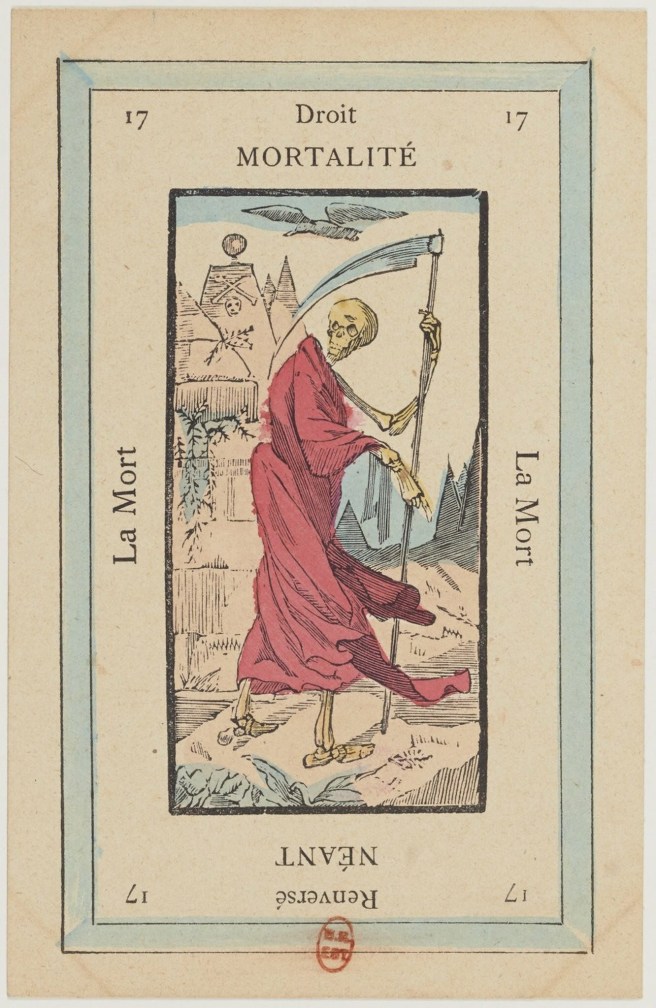
La Mort from Etteilla‘s tarot deck circa 1850–1890.

Death, we are assured, simply means some major change is coming, so just calm down. But if death doesn’t signify death, which card does? It better not be the Hierophant.

More importantly, this misinterpretation is at the wrong stage. The misinterpretation of the card called “Death” to signify death seems pretty reasonable (sometimes, a cigar is just a cigar). It’s only a problem because death is immediately associated with negative thoughts.

“Don’t worry, that doesn’t mean what you think it does”

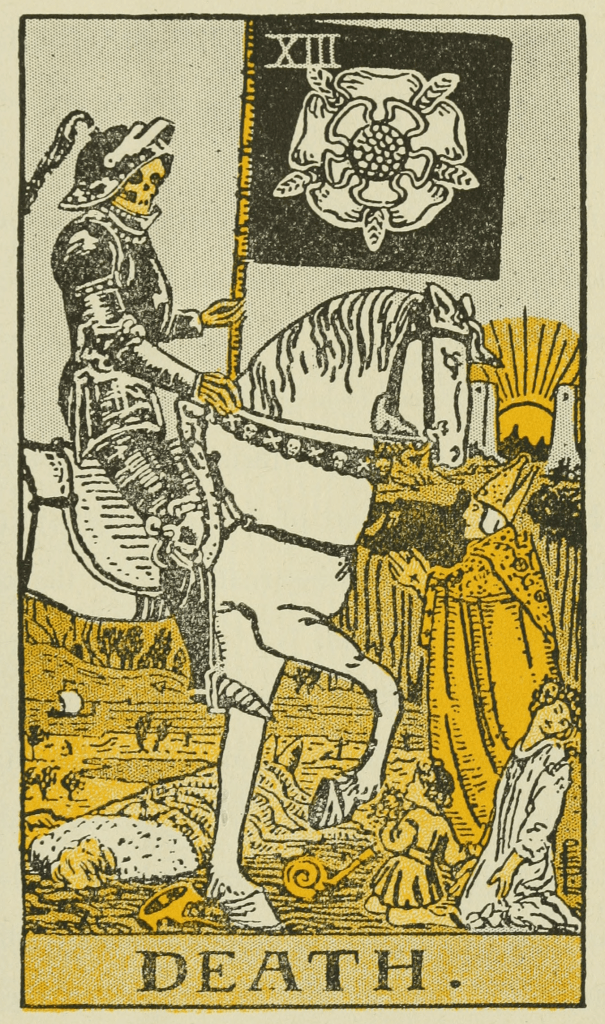
Death from The Illustrated Key to the Tarot, 1918

To be fair, death is change. And in some interpretations it could be considered simply a sign of change. But using various interpretive tools to talk death out of being DEATH is hardly helpful. It is important to get out of the mindset that death is some sort of aberration that is best ignored.

That death card should be a chance to genuinely consider death. I mean – death is the most assured thing in any future, whether the cards say so or not.

Death from the Pierpont Morgan Bergamo tarot deck, 15th C.

Try turning the whole interpretation on its head – When we encounter real death, it doesn’t need to simply be the end. It’s a sign of things changing, as they inevitably do.

Death is change. Also, death is death. Change, however need not be death.