
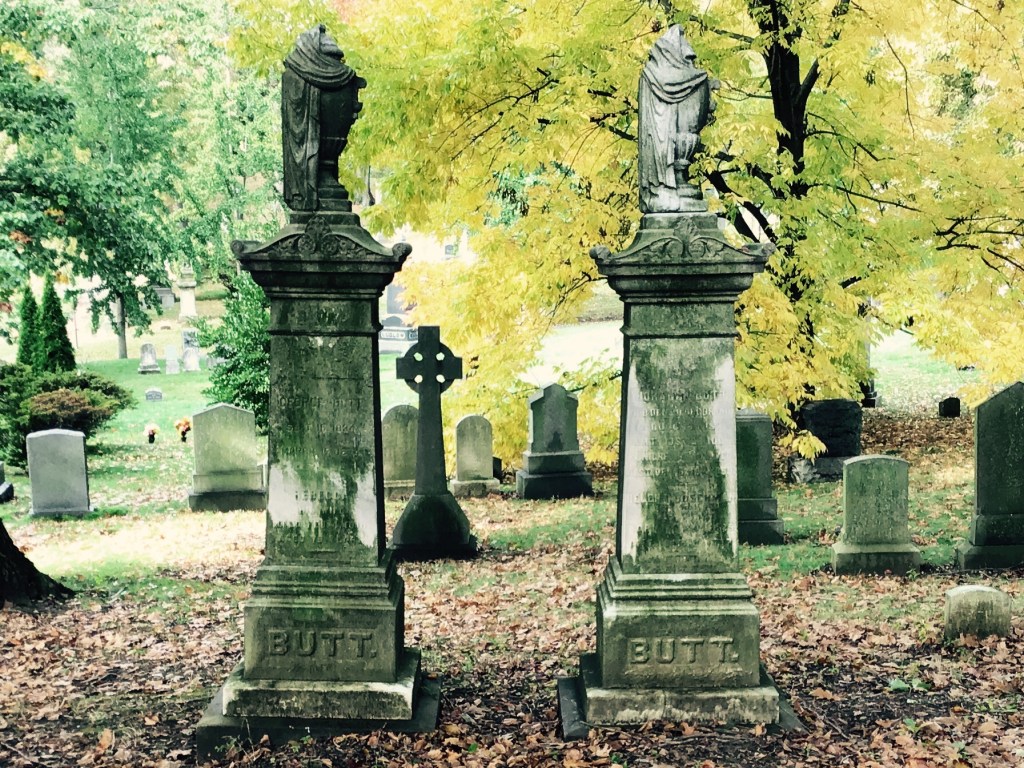
The Book of Common Prayer provided the world with the lovely vow “til death do us part” – circa 1550 CE. Prior to that – all bets were off!
Not exactly, but every now and then an archeological team will discover a grave with a couple who seem to have resisted the death = parting (at least physically). It’s hard to say what these glimpses into the past mean, as we are very short on context. But it keeps happening:
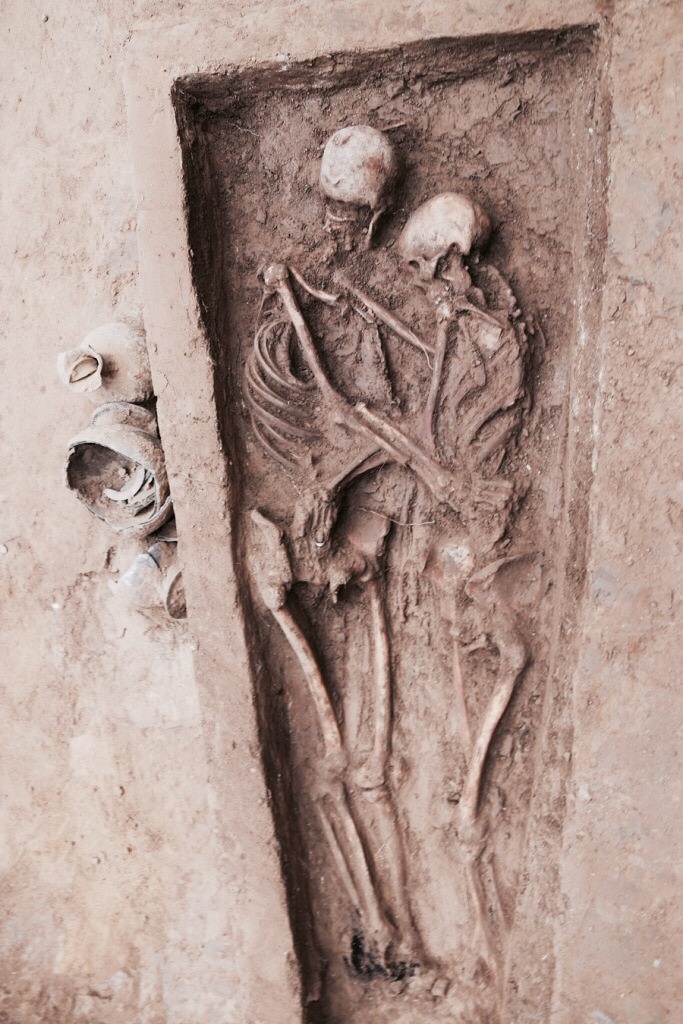
One of the most recent discoveries was in Northern China. A few things make it notable – the primary one being the first discovery of its kind in China. The two skeletons are in a loving embrace, and the woman’s ring
finger (convenient…) still sports a silver ring. I assume most other cultures don’t call it a ring finger. But that would be a post for a page about marriage, not death.
Graves with more than one person were not uncommon where this
particular pair was found, but the hug is unlike anything else in China.
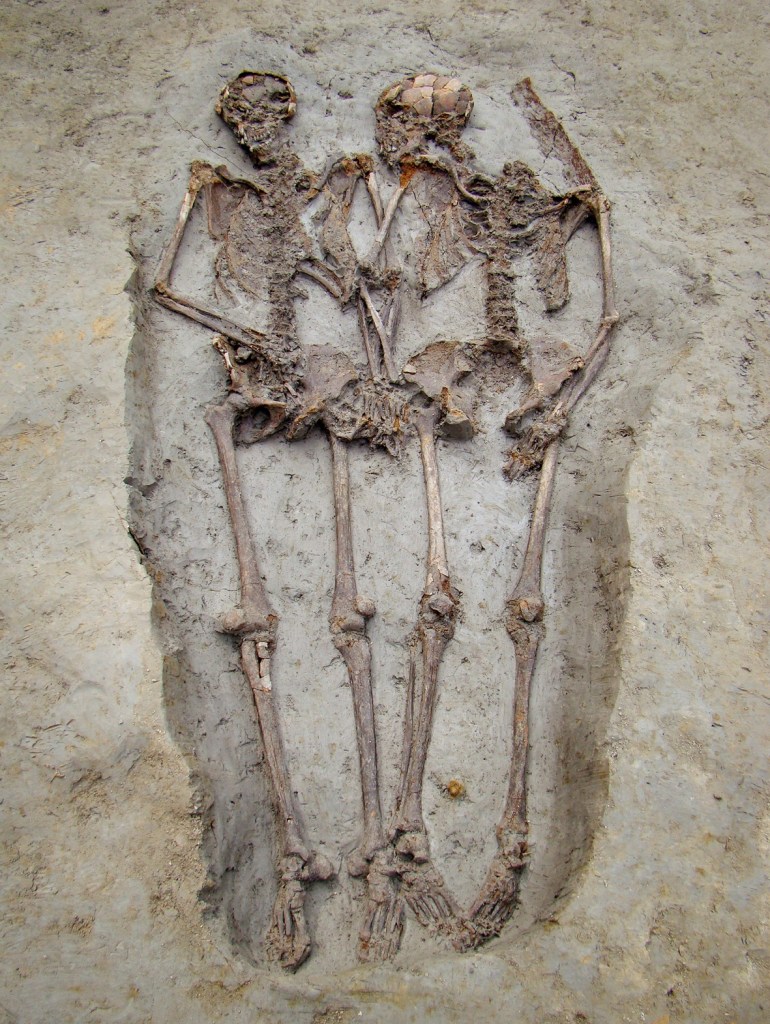
A near contemporary pair was found in the Roman empire, in Modena,
Italy. Some very deliberate handholding we’ve got. And what’s more, scientists recently discovered that both skeletons are male! Is this some LGBTQ for the SPQR? Like all these burials, who knows?! But let’s say yeah – this is a really nice same sex burial.
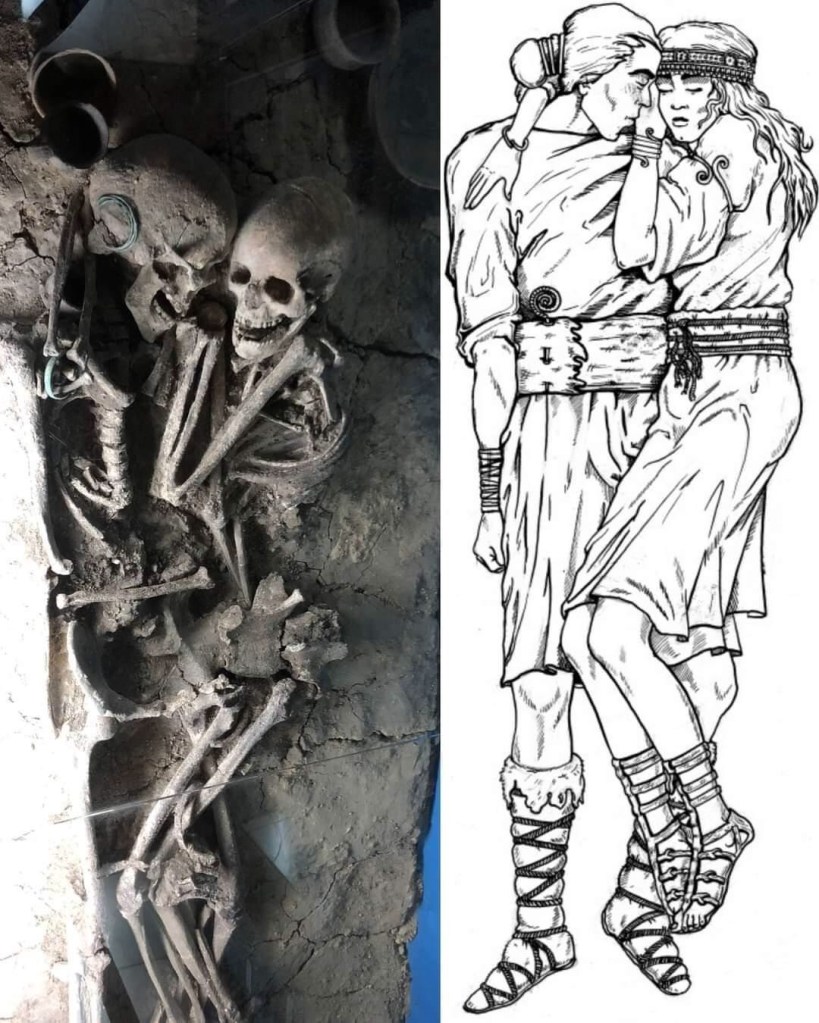
Approximately doubling the historical distance, there was
recently a grave discovered in the Ukraine from about 3000 years ago. Man and woman, together in a way that scientist seem fairly convinced required the woman to go in living. It’s a culture (the Vysotskaya) that apparently were known for their “tender” burials. Leading to questions including “Known by whom?” and “Tender to whom?” Kinda subjective.
(Not including the Hasanlu Lovers – sure, they look like they’re kissing. But the whole “town being massacred “ thing removes this from “burial” considerations)
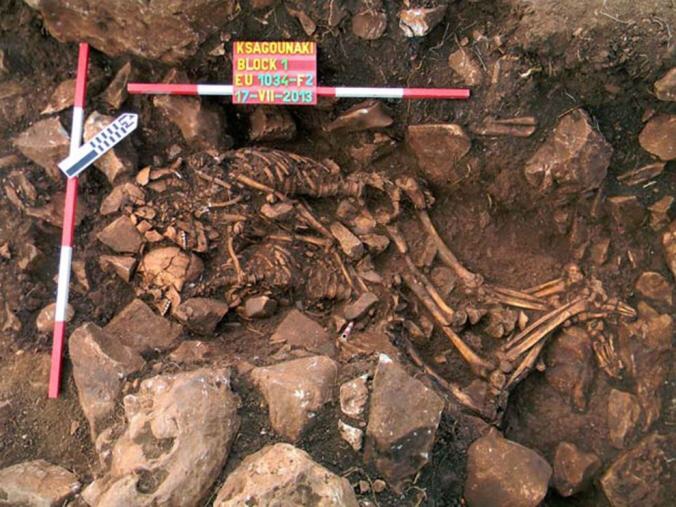
Another huge leap in time brings us to the “Embracing Skeletons of Alepotrypa” from nearly 6,000 years ago. The couple was found during an excavation of the Diros Caves in Greece. Not much to go on here, on account of the age. But, to quote Bill Parkinson, associate curator of Eurasian Anthropology at Chicago’s Field Museum: “They’re totally spooning.”
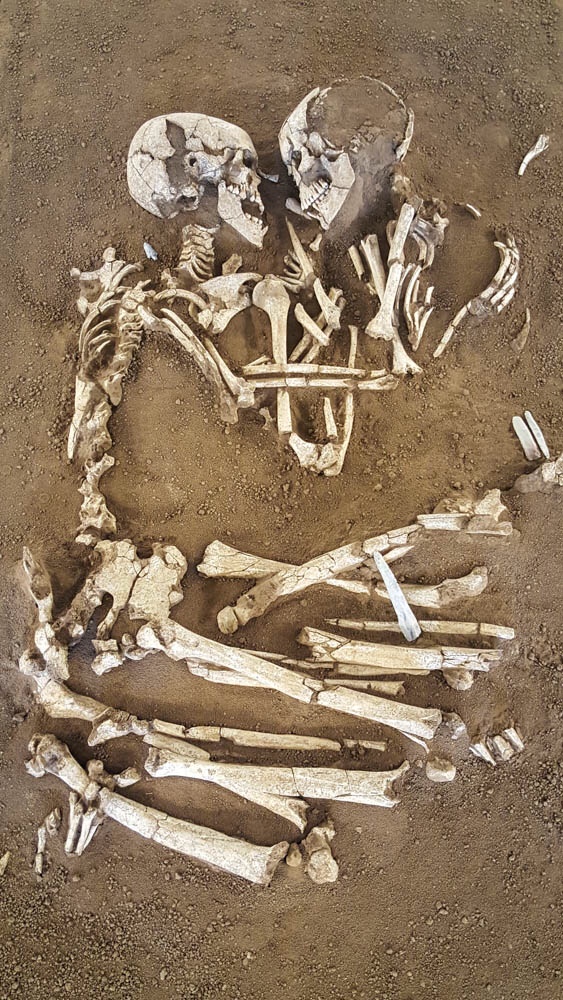
Lastly are the Lovers of Valdaro. Another pair from about 6,000 years ago. So endearing was their embrace, archeologist were immediately resistant to separating the pair. So they’ve been studied as they are. Luca Bondioli, anthropologist at Rome’s National Prehistoric and Ethnographic Museum, acknowledges the find has “more of an emotional than a scientific value.”
But the choices these people and these cultures made every burial were meaningful, for at least a few people. And I think the oddness even better illustrates their connection to us. These pairs aren’t common, but are they an aberration? Or is it just confirmation that inexplicable decisions (sometimes from the heart) have always been a part of the human experience. All the way to death.

 Death Becomes You