Ars longa, vita brevis. Etiam mors est arte.

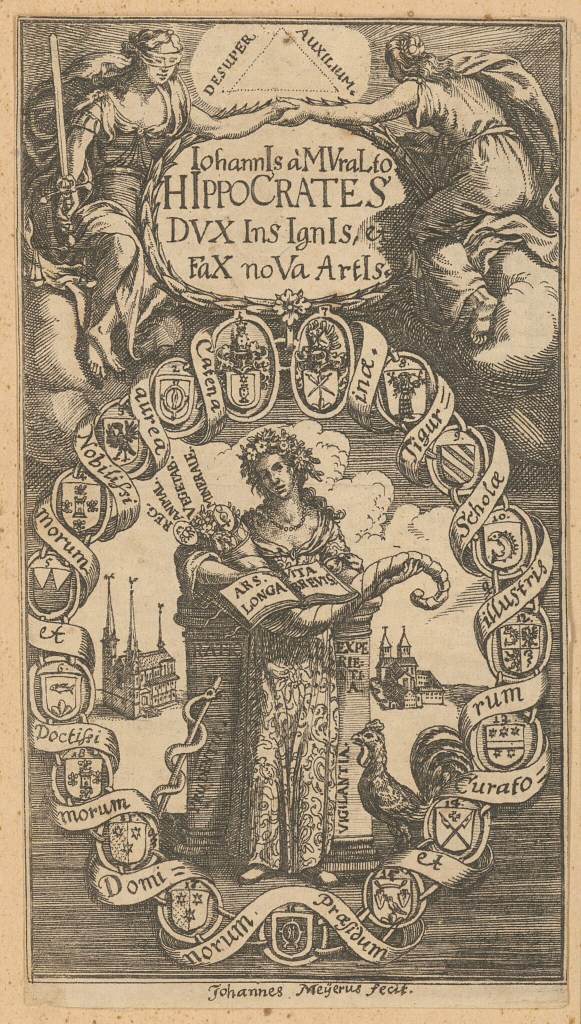
Johann Meyer: Iohannis à Muralto Hippocrates … (Basel, 1692)

Once again, my minimal effort to double-check a quote resulted in a lot more reading than I intended. That quote – “Ars longa, vita brevis” (Art is long, life is short) is just part of a longer quote by Hippocrates (the pater of medica himself!), and I think it’s out of context.

My read of the quote had always been along the lines of “the artist may die, but art will live beyond them” – but that doesn’t seem to be what Dr. Hippo wanted to get across. The whole quote:

“Ars longa, vita brevis, occasio praeceps, experimentum periculosum, iudicium difficile.”

“Life is short, the art long, opportunity fleeting, experiment treacherous, judgement difficult”

Notable is how one should define “art” – not in the sense of a work of aesthetic beauty, but art as in a craft or skill. This is not a grand proclamation about art outlasting life (which is fine sentiment), but instead an observation on how challenging it is to get anything done in this life. You’ve only got so many years – and learning takes a while, plus you’re only at your prime briefly (if at all), and you’ve got to trust yourself to not screw it up. Thanks doc! To be fair, he actually said this:

Ὁ βίος βραχύς,

ἡ δὲ τέχνη μακρή,

ὁ δὲ καιρὸς ὀξύς,

ἡ δὲ πεῖρα σφαλερή,

ἡ δὲ κρίσις χαλεπή.

A few years later (roughly two thousand), a little book called Ars Moriendi was published. The Art of Dying – look at that correct usage of “art”. Not a great read – kinda cobbled together quotes from the bible and church fathers all about what to expect while dying, mostly in regards to temptations. But the woodcuts are a beauty to behold.
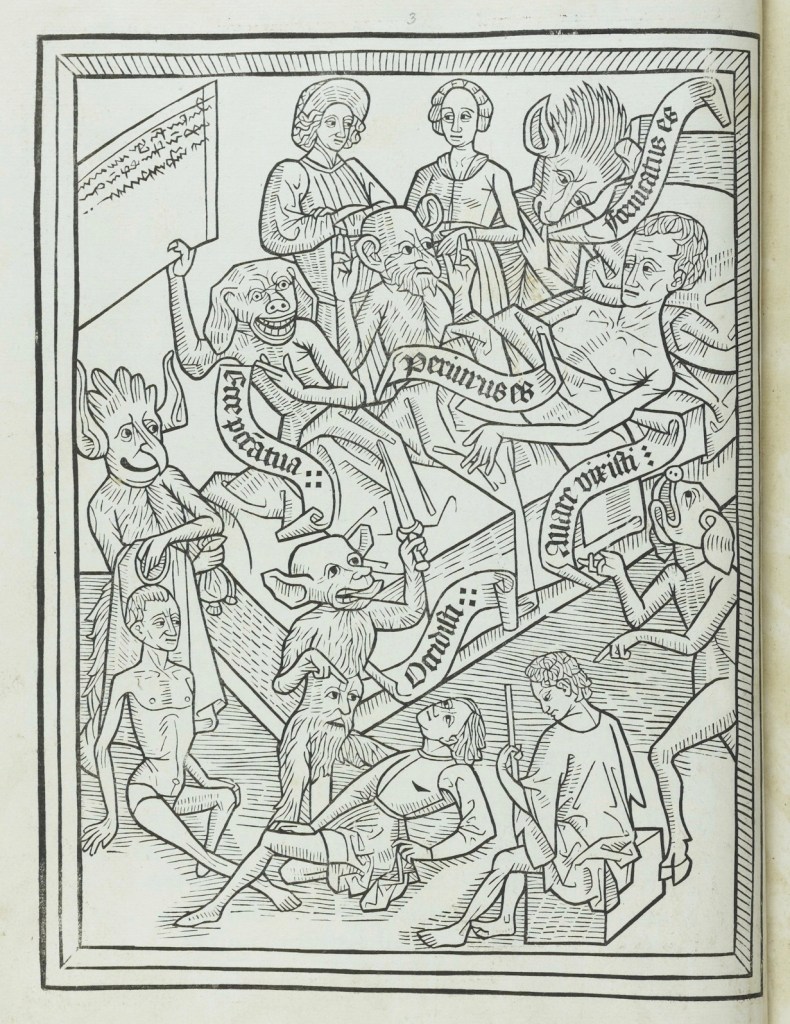

Demons! Temptations!
I’m a particular fan of the demon holding up cue cards… of the damned.

The book was written in the early 15th Century as a reaction to the Black Death from half a century before. Death was on the brain, and this book was not only to put the dying at ease, but also empowered others to help with the dying process, owing to a severe shortage of priests and other church certified folks who were those summoned to aid in the end of life.
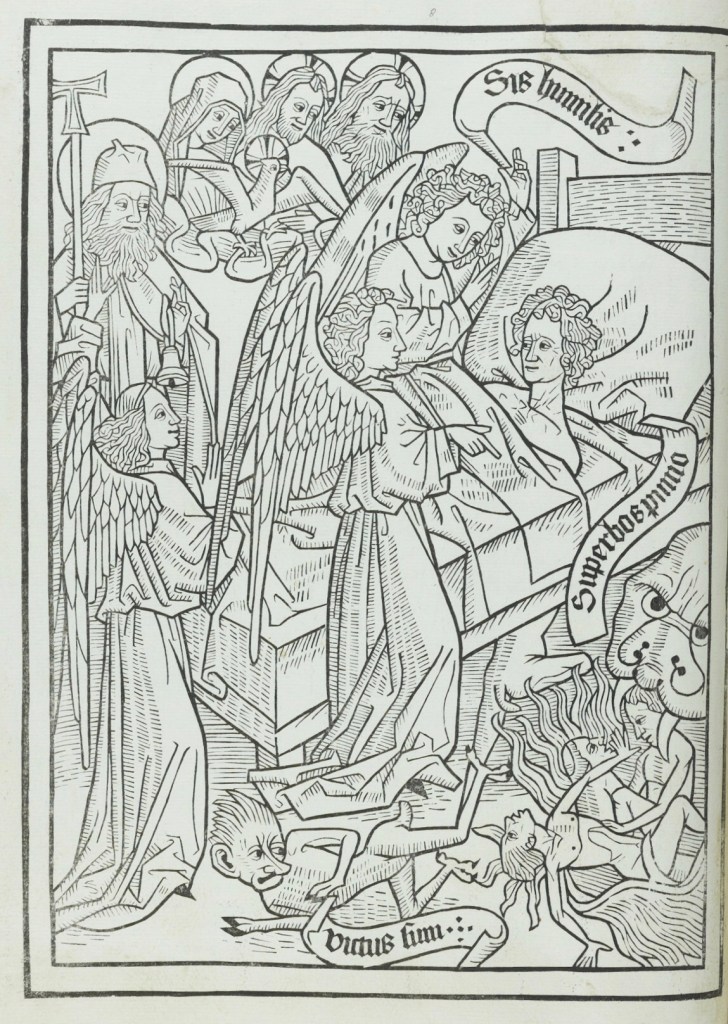
Angels! Virtues!

Never hurts to start confronting death, wherever you are in life. So you can now quote me (in Latin):

Ars moriendi tota vita.

The art of dying takes your whole life.

Well la-di-da…

The Comet (Johnson City, Tenn), December 26, 1901

Always be prepared to do undertaking in first-class style.

That’s a mantra. Way better than Metallica’s “My lifestyle determines my death style” line, which makes me laugh just thinking about it.

The Crying of Label 139

I hope you don’t need a whole roll…

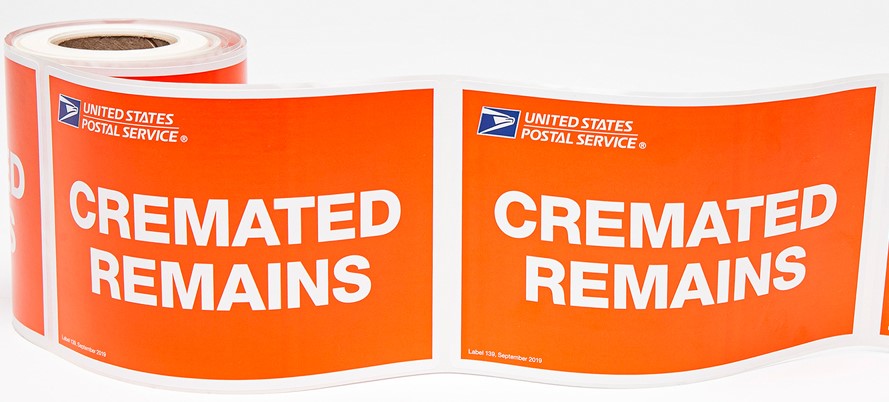
If you want to travel affordably with a real potential for adventure, you could do worse than waiting until you’re ashes – and get an insider view of the US Postal Service in the process. This opportunity could be yours with the purchase of Label 139. Cremated Remains.

(“Label 139” is a great name for a goth record label)

Amid covid and general changes in attitude, cremation (and the shipping of created cremains), has become much more common. Common enough that the USPS has had trouble keeping up with demands for the packaging.

USPS’s guide explains that the ashes must be packed in a “sift-proof container” – lest you risk having an inadvertent Aerial Scattering, the technical term for throwing ashes from a plane. Also, my second entry into the “death terms that should be band names by now”

I bet they play fast

As for adventure, there probably won’t be any. But you never know! The podcast Last Seen has an episode about the very roundabout journey one particular urn took.

It’s a great listen, no doubt because it’s a fascinating mystery. But it also shows how personal and biased we can be when it comes to the remembrance and memorializing. Every culture, every family, every person has a unique way of confronting grief and loss. And each person has their own idea of how they want to be remembered.

We rarely have control over our own memories, so it’s quite audacious to believe we can control others’… but we always try.

Man is a noble animal, splendid in ashes, and pompous in the grave.

Sir Thomas Browne

Continuing Education

Congrats

While everybody is an amateur at death, that doesn’t stop us from trying to learn enough to defeat it. Or, possibly, just learn enough to come to terms with it.

In 1580 Montaigne wrote a wonderful essay entitled “That to Study Philosophy is to Learn to Die” – the whole thing is worth a read, but I particularly like

Let us disarm him of his novelty and strangeness, let us converse and be familiar with him, and have nothing so frequent in our thoughts as death.

It was at the local library that I first remember realizing how much life and death are intertwined. Pawing through books in a basement corner at the earliest numbers the Dewey decimal system. But this didn’t feel like a nonfiction section. I’m pretty sure some PBS program taught me that nonfiction equals facts. But were these facts?

The paranormal. The occult. The unconscious. Stuff about the bible, but also stuff about aliens. This section was great.

Some things are natural. Some things a unnatural (non-natural, if you will). And some things are supernatural. Why not fiction, nonfiction, and superfiction?

The Dewey Decimal System classifies the 100 section as Philosophy. The 100 section stretches from Metaphysics (110) to Modern Western Philosophy (190), with my early love, Parapsychology & Occultism (130) right in the middle. Seems that to study death is to learn to philosophize.