
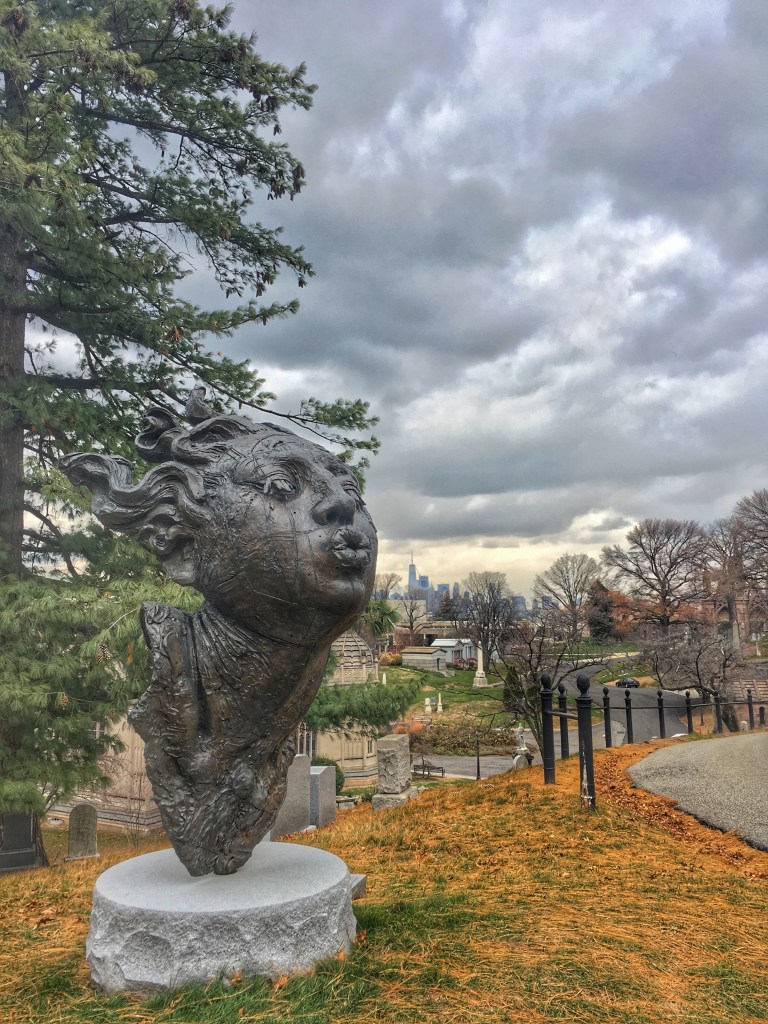
I volunteered at Green-Wood Cemetery this past weekend. I spent the hot and muggy morning weeding and mulching and sweating and thinking. A graveyard is a relaxing spot for gardening.
There’s probably some lesson or metaphor within the activity of pulling living weeds out of the same spot we are regularly depositing dead people. It’s hard not to think about how we, in our very human (and arguably unfair) way, make the declaration of what is a “weed”. It turns out, in this case, it’s Bermuda Grass. Particularly amusing because of our close proximity to the Caribbean neighborhood of Flatbush and the proliferation of these-can’t-possibly-be-legal weed shops.
So I focus my weekend energy on the weeds – pulling them up so that some other plants have a better shot. And I think it’s this orderliness that often draws us to cemeteries. The unpredictability of death and our inability to make it stick to our schedule results in a whole flurry of organization once life is over. That’s when we have a chance to wrap our hands and heads around it – living is changing, and it’s quite a challenge to organize something that keeps changing.
So it’s little surprise that we see such orderliness in cemeteries and memorials, crypts and tombs. It’s particularly telling that “mass graves” are a true sign of butchery and horrors of war – a lost last chance to tidy things up and honor those gone. While death continues to frustrate efforts at an orderly life, we humans jump at the chance to categorize (living vs. dead) and organize (cemetery, block, plot, etc). Of course, there are those who have no interest at all these things, post-life. For there are those who admirably go so far away from organization- wishing one’s body fully back to the earth, as if to say, “well, clearly my way of organizing the world is now irrelevant; nature, back to you!” Ashes to ashes. Mulch to mulch. A magnet to the hard drive. Death isn’t the hands of a clock stopping. Death is the absence of those hands at all. That person no longer exists in time. A zombie or vampire is scary for many reasons – but I’d argue that one of the most troubling elements is a person changing AFTER death. How could it still be them? When a person dies, they are frozen in time. Death should provide the final image, a cessation change of “who a person was”. Ghosts, angels, spirits – they do not exist in time the way the living do. For the believer, it would be silly to envision an ancestor’s ghost getting “older” or an archangel coming down a little worse for the wear after all these years. The corporal part can do nothing after death but decay… why would we want to bring that back?!
In short time, weeding had my very real and physical body covered in perspiration. I’d hazard to guess my mental state was a little sweaty as well. I decided to sit for a moment near the pond. The fountain sprung to, well, not life, as it were – but the fountain started fountaining away. Dragonflies zipped about with their overaggressive maneuvers, no doubt because they can never put those wings away. I later looked up “Dragonfly symbolism” to see how it might relate to death. And, like every symbol – it depends on who you talk to. Which I guess serves as symbolism itself. What’s a weed? What’s death? What’s a dragonfly mean? Those are very human questions. Most questions are.
Soon I was back to battling the tenacious Bermuda grass. I was helping a young tree, itself a growing reminder of a loved one no longer on our timeline. I noticed how much mental classifying I was doing. This plant is a weed. This plant is a willow. This plant is a Memorial. This plant is mulch.
It’s telling that much of our reliable historical data comes from death records, grave sites, crypts and the like. Our understanding of the world prior to us, whether it’s 100 or 10,000 years ago, comes from looking at the dead and their markers. What’s to say this weeding isn’t a bit of long-term maintenance on some of humanity’s record keeping?
 Death Becomes You