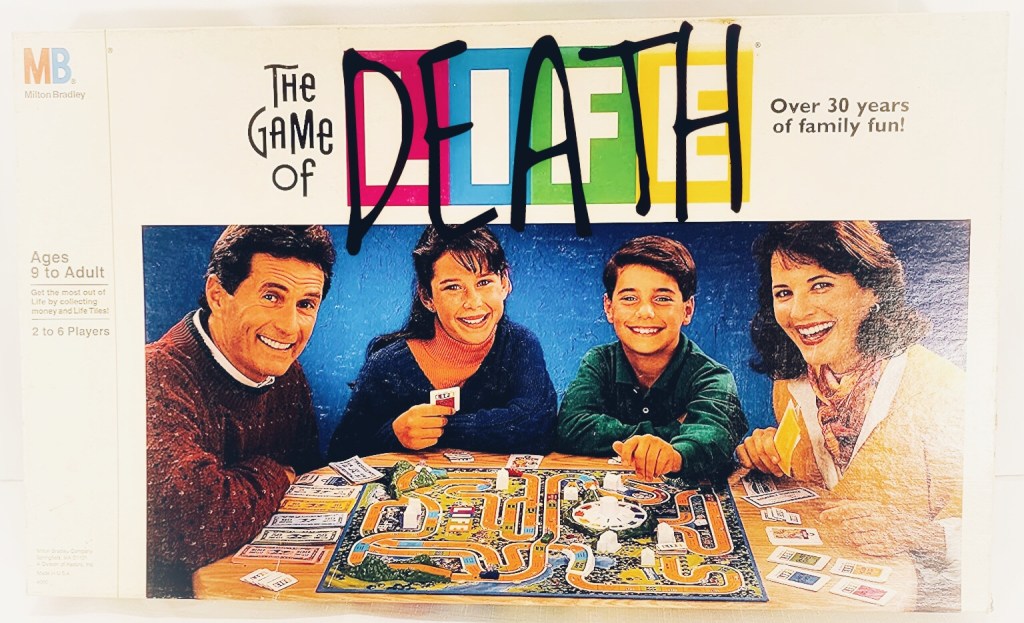
The Game of Death

If you look up the ancient Egyptian board game Senet, you will find articles and essays referring to it as “board game of death” – as though that is the translation of “senet” (it is not – senet means “passing” or “afternoon”) or that the phrase “board game of death” is something we all know exists, but, like dark matter or bigfoot, we just haven’t seen it yet.

The game of death, but no die

Senet, starting around 5000 BCE, spent many years not being the “board game of death”, but rather just the board game. In fact, archaeologists think it was about 2,500 years into it’s life when it took on a religious significance and a connection to the afterlife. Unlike a Ouiji board, senet was a game – you didn’t need an afterlife or spirits to enjoy it. And unlike Tarot, which evolved from game to fortune telling, senet seems to have never stopped being a game, even if people stopped seeing it that way. Senet is not a really a fun friend who can also contact the dead, instead it’s more akin to a seventy year old man having a religious experience and then suddenly THAT’S his whole identity.
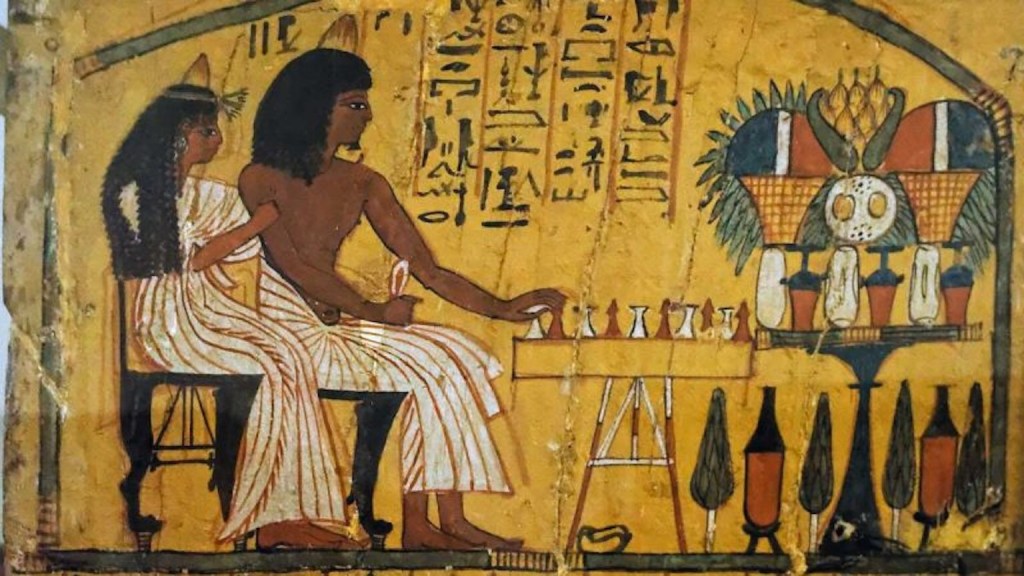
Board to death?

We also don’t quite know the rules, regardless of whether one is playing for fun or, I don’t know, soul (ka)? The vibe is backgammon-y, but there are some specifics we don’t know. Like, “what does the square with squiggly lines mean?” and “Do I play with or against my dead relatives?”
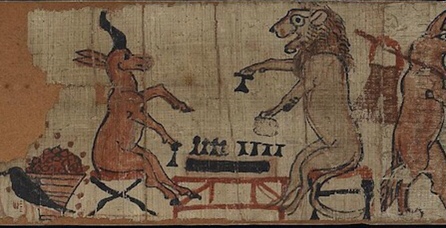
The game of death is for everybody!

Ancient Egypt was a world where religion and social life and culture were all intertwined, so maybe it isn’t so surprising that there is such overlap of the spiritual and the social. Is America ready for a ghost-hunter / poker tournament reality show? I’m thinking yes. Scared Straight, perhaps?
Cheek to Cheek

The Book of Common Prayer provided the world with the lovely vow “til death do us part” – circa 1550 CE. Prior to that – all bets were off!

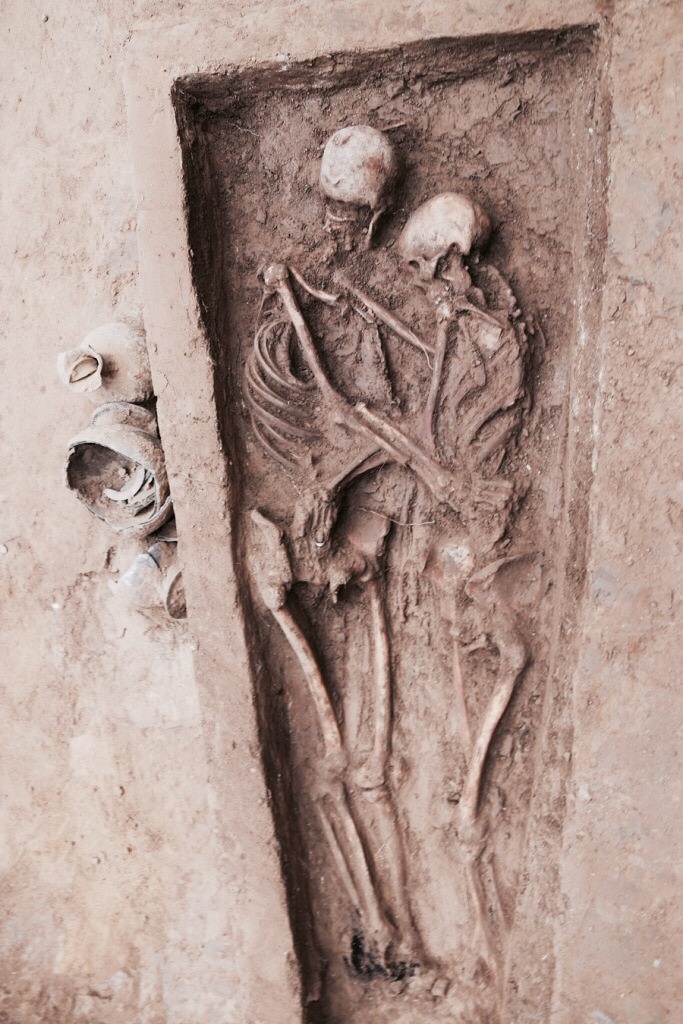
Not exactly, but every now and then an archeological team will discover a grave with a couple who seem to have resisted the death = parting (at least physically). It’s hard to say what these glimpses into the past mean, as we are very short on context. But it keeps happening:

One of the most recent discoveries was in Northern China. A few things make it notable – the primary one being the first discovery of its kind in China. The two skeletons are in a loving embrace, and the woman’s ring
finger (convenient…) still sports a silver ring. I assume most other cultures don’t call it a ring finger. But that would be a post for a page about marriage, not death.

Graves with more than one person were not uncommon where this
particular pair was found, but the hug is unlike anything else in China.

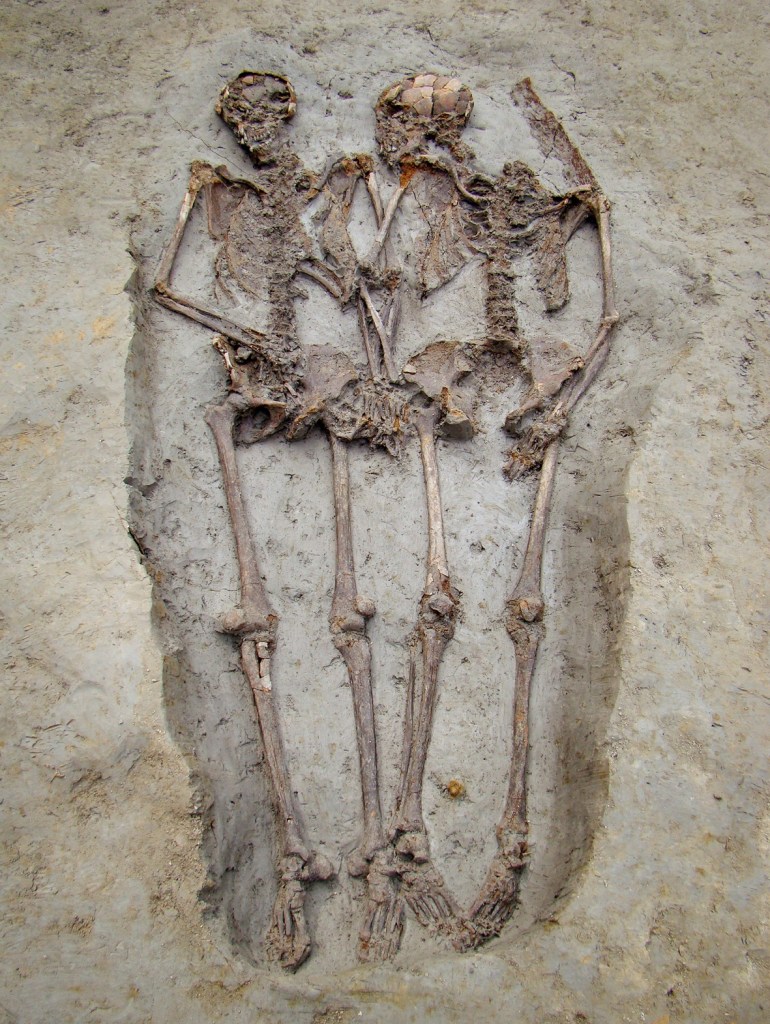
A near contemporary pair was found in the Roman empire, in Modena,
Italy. Some very deliberate handholding we’ve got. And what’s more, scientists recently discovered that both skeletons are male! Is this some LGBTQ for the SPQR? Like all these burials, who knows?! But let’s say yeah – this is a really nice same sex burial.

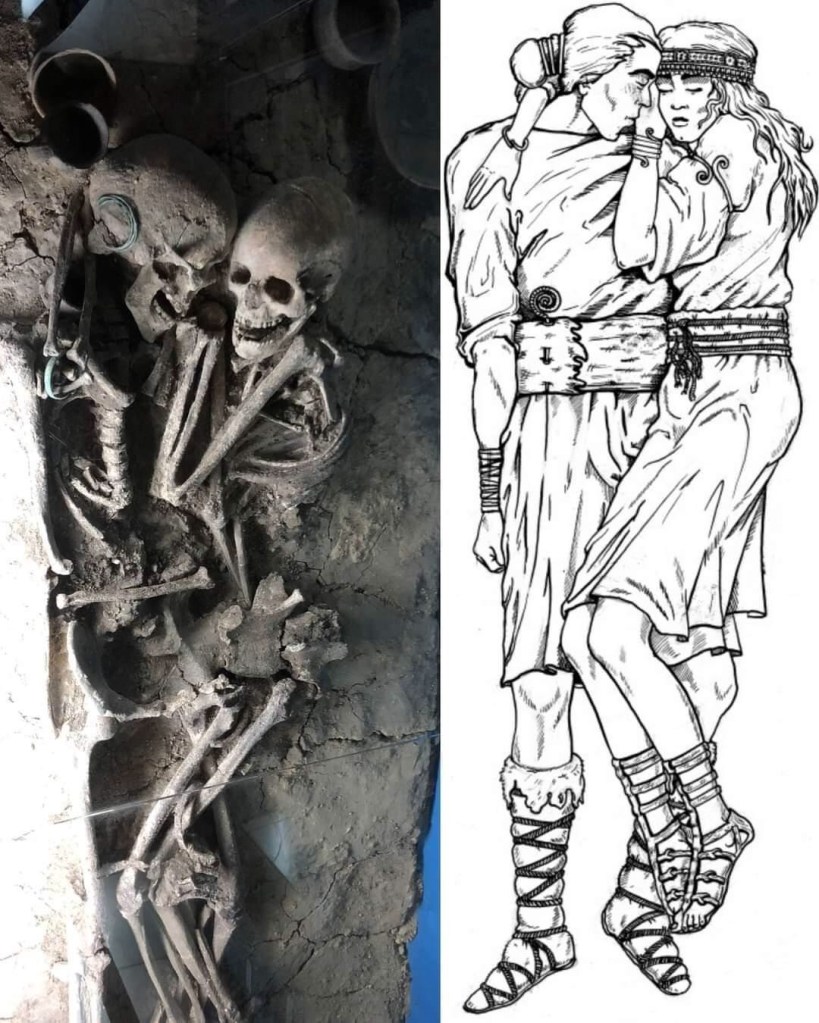
Approximately doubling the historical distance, there was
recently a grave discovered in the Ukraine from about 3000 years ago. Man and woman, together in a way that scientist seem fairly convinced required the woman to go in living. It’s a culture (the Vysotskaya) that apparently were known for their “tender” burials. Leading to questions including “Known by whom?” and “Tender to whom?” Kinda subjective.

(Not including the Hasanlu Lovers – sure, they look like they’re kissing. But the whole “town being massacred “ thing removes this from “burial” considerations)

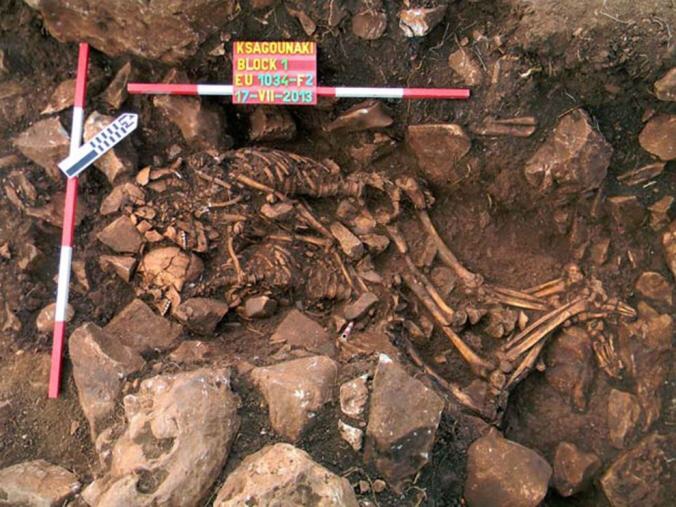
Another huge leap in time brings us to the “Embracing Skeletons of Alepotrypa” from nearly 6,000 years ago. The couple was found during an excavation of the Diros Caves in Greece. Not much to go on here, on account of the age. But, to quote Bill Parkinson, associate curator of Eurasian Anthropology at Chicago’s Field Museum: “They’re totally spooning.”

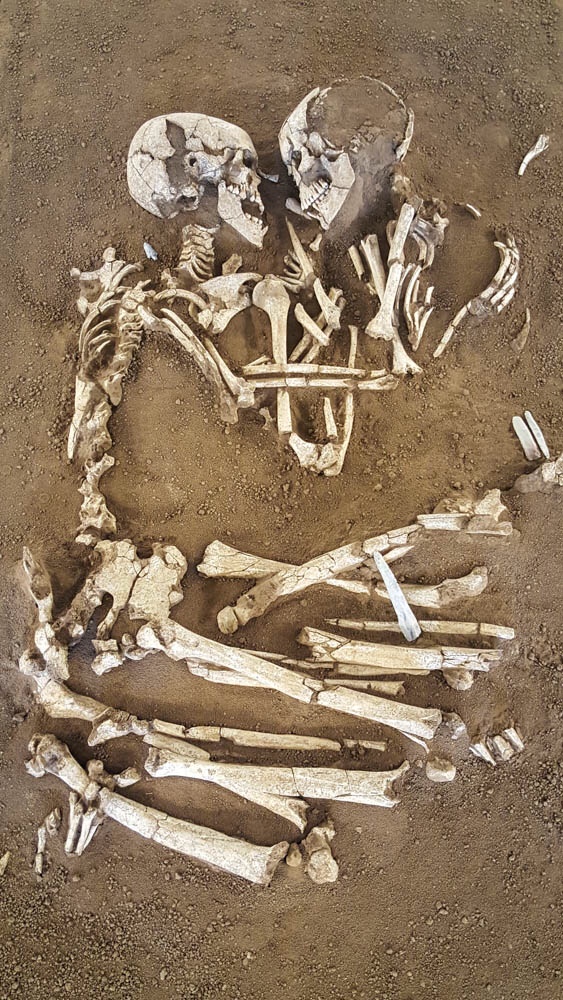
Lastly are the Lovers of Valdaro. Another pair from about 6,000 years ago. So endearing was their embrace, archeologist were immediately resistant to separating the pair. So they’ve been studied as they are. Luca Bondioli, anthropologist at Rome’s National Prehistoric and Ethnographic Museum, acknowledges the find has “more of an emotional than a scientific value.

But the choices these people and these cultures made every burial were meaningful, for at least a few people. And I think the oddness even better illustrates their connection to us. These pairs aren’t common, but are they an aberration? Or is it just confirmation that inexplicable decisions (sometimes from the heart) have always been a part of the human experience. All the way to death.

Spiritual Evolution

Charles Darwin attended at seance in 1874.

He ghosted.

Leaving early, he found the the experience “Hot and tiring”

(this comes from a man who spent five years on the HMS Beagle and went into the jungle to collect bugs by his own choosing!)

Major advances in rapping with the dead

With their rapping, and their tapping
Rap-tap-tap to wake our napping
In the restless dream of error
Hear the weird the spirit brings


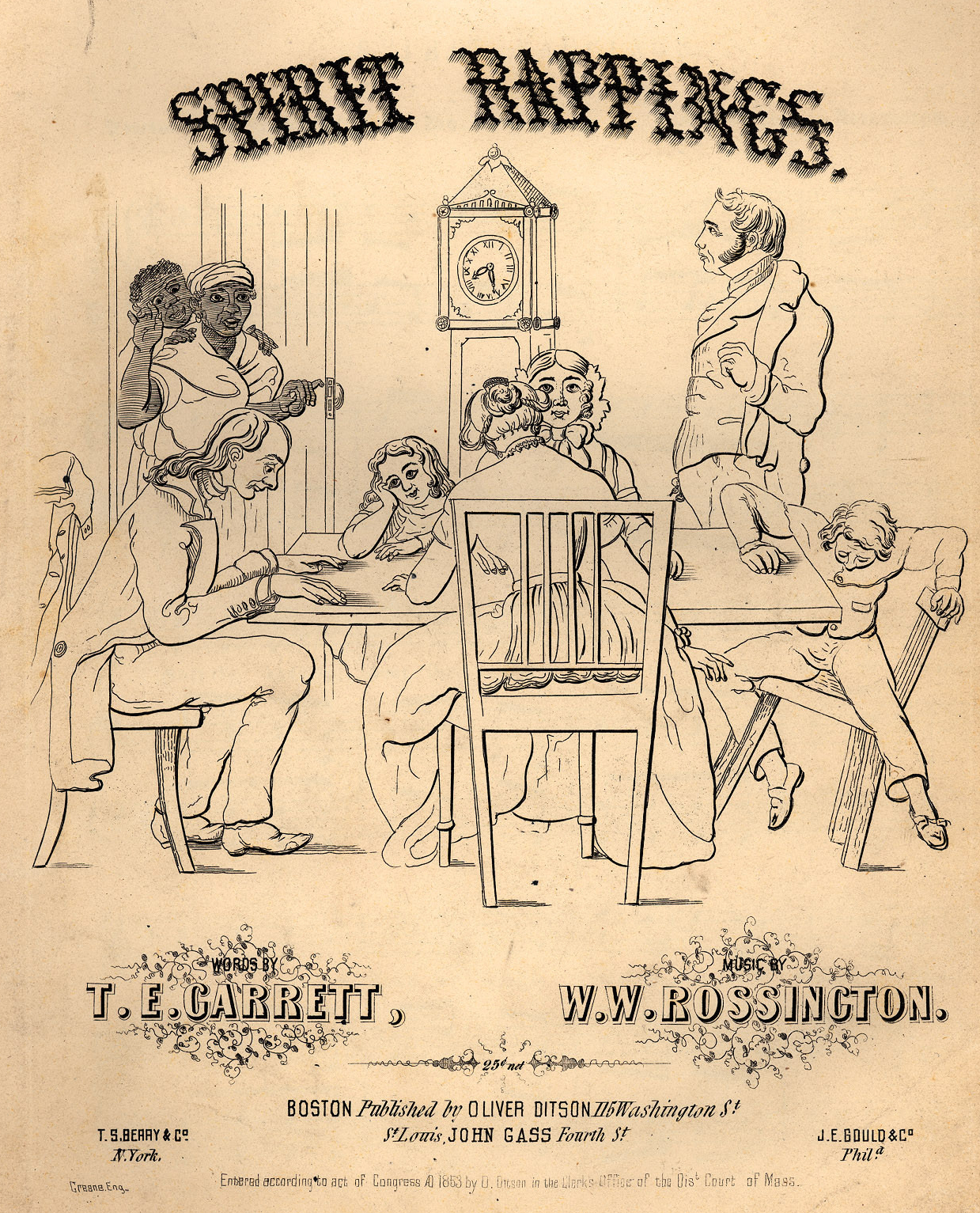
Spirit rapping, a way of communicating with spirits through knocks, was very silly and very hip in the Victorian Era. On the list of “easy ghost sounds to fake” I’d imagine knocking was right up at the top. Nonetheless, it was quite the popular pastime – enough that the fad got a song with the excellent line “hear the weird the spirit brings” (weird is actually spelled “wierd” in the sheet music – pretty weird indeed). You can look up the song and hear renditions of it. Alternatively, you can assume I already did that and decided it wasn’t worth posting.

Spirit rapping was debunked after a few years. Over a century later, rapping would come back in a totally new (and utterly unrelated) form. But spirit rapping?

I mean, c’mon – Zombies? Afterlife? Skeletons? If that’s not spirit rapping, what is?!

To be fair, they don’t really discuss the afterlife in the song. But that video!

My favorite spirit rapping? Aesop Rock’s Jumping Coffin (with a video that a very different vibe for similar idea)

The song itself works as an invitation for spirit rapping:

Some try to combat any kind of odd force tryna make contact, nah
Let it in, let it in
Some try to stonewall any kind of woo-woo tryna make a phone call, nah
Let it in, let it in


*A post about rapping and the dead – and not a single mummy joke. You are welcome.

**When else am I going to get a chance to share a picture of Meechy Darko and me?