
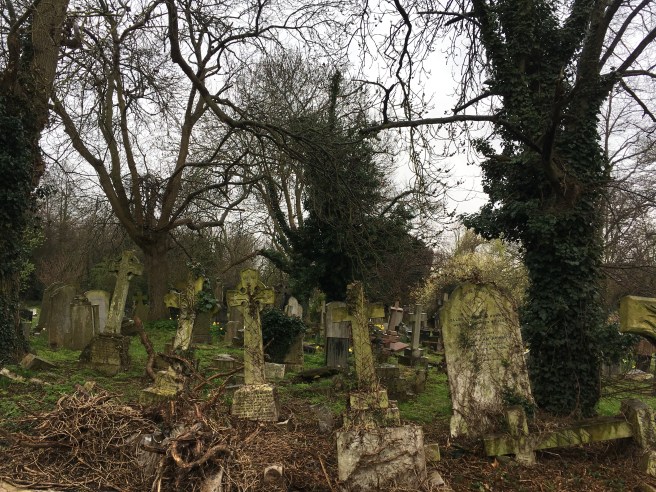
Rarely are human edifices and nature so aligned as a park cemetery. It’s telling that humans are most harmonious with nature when dead. Seems kinda obvious now that I’ve written it out.
ANYWAY – I love trees in cemeteries. Partly because they are beautiful. They really set the mood. But I also love what trees represent. And what they can represent.
The nice thing about cemetery trees as symbols is that they always “work”. If you were walking through a graveyard and see a headstone with the symbol of an upside-down torch, you’d know it had specific meaning. What that meaning is – likely no idea. And that symbolism can be lost to time. In a few thousand years archaeologists are going to think, “these people didn’t understand fire AT ALL – or they’re magic!” (Probably not, but still the specific meaning may be lost without taking it to “ancient aliens created the pyramids” level of stupidity)
Trees are beyond this. A tree as a symbol of life and growth seems obvious enough. But much more importantly – trees don’t need to be symbols to be valuable. Trees are successful just by being trees. Was it put there deliberately? By chance? (You never get a carving of a skull with wings by chance)
The tree is inextricably tied to seasons. Being part of the cycle of life and death, trees serve as a simple reminder of our place in time and nature.
Do I have any favorite cemetery trees? Why thank you for asking.
The Yew Tree
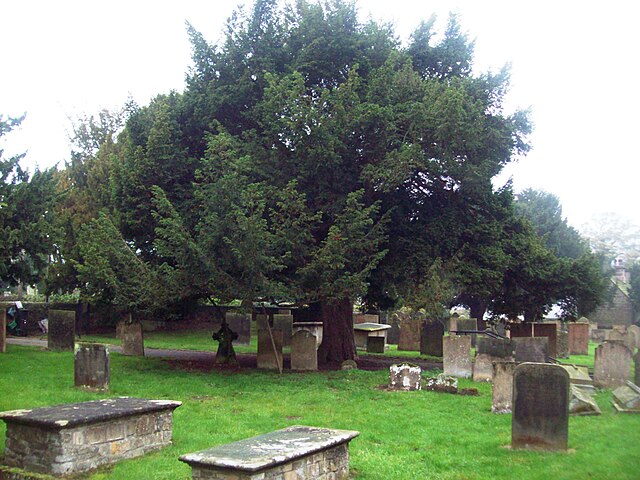
Look, a lot of tree species are in the running for best cemetery tree, the yew comes up often. And why not? They can live hundreds of years, outlasting many generations and remaining a living symbol for a long time. Its association with life and death makes sense in a way – the yew is exceptionally toxic and dangerous if humans consume it, yet the Japanese and Native Americans both used the yew for healing properties. And a slightly darker connection to death – the yew went nearly extinct in parts of England thanks to the Hundred Years War – the English’s advantage often attributed to their long bows, made out of yew. Guns came along and saved the yew. Thanks guns (find the silver linings)! (1)(2)

The Hardy Tree
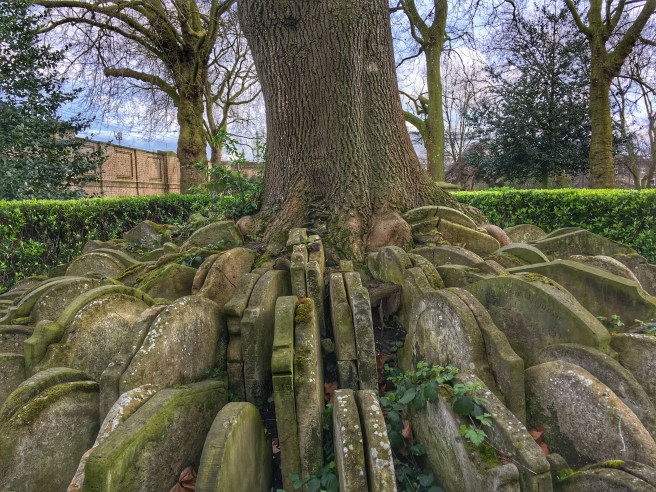
Sadly, this tree has recently fallen. But a truly special and strange graveyard tree. Thomas Hardy, poet and novelist, quite good, I’d say, was a young man at an architecture firm that had to move some graves at St. Pancras Old Church in London. Make way for the rapidly expanding underground transit! 1860’s – What a time to be alive. Bodies were exhumed and moved; Mr. Hardy saw it fit to arrange the leftover headstones in a nice little ring around this ash tree. And it grew in and around the graves until 2022, when the tree succumbed to a fungus that had infected it in 2014. Fittingly, the caretakers knew the end was coming, just not exactly when, so the tree was getting in-home hospice care. (3)
Roger William’s Apple Tree
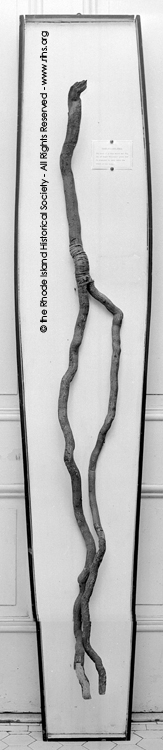
More commonly known as The Apple Tree that Ate Roger Williams, but that’s too sensationalistic for me. The founder of Rhode Island was originally given a less than dignified burial in an unnotable and undernoted grave. It was 200 years later, in 1860 (apparently the heyday for cemetery tree news), when they dug ol’ Roge up, only to find a sizable root had grown right through him – even splitting at the legs. And an apple tree no less! Cemeteries, apple trees, founder mythology – it’s all very New England. (4)
Any good tree/grave combo
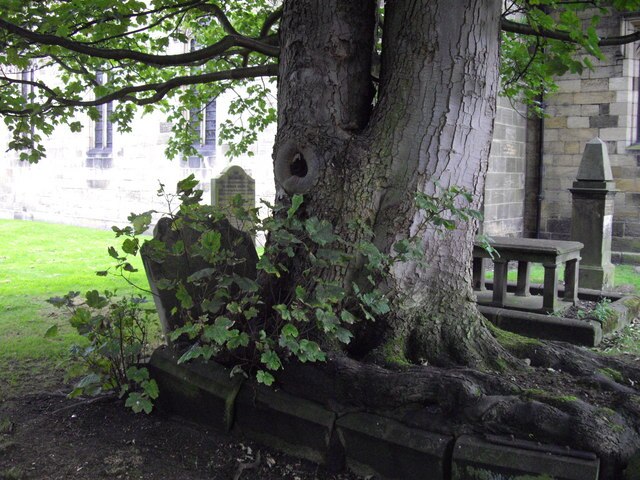
See picture. The symbolism is bursting out…
Tree graves

One of the more curious grave types is the tree grave. Thick with symbolism – sometimes shaped as a cross, or a series of logs for mom, dad, etc., or sometimes just a stump to signify too short a life. There’s also the unavoidable symbol of carving a living thing out of rock to memorialize the dead while surrounded by living versions of the carving. Weird. A lot of the tree carving can be attributed to Woodmen of the World, an organization founded to provide life insurance to rural families. If you were game for getting a grave that looks like a stump, they’d chip in. Their symbolism is inspired from the idea of pioneers clearing out the woods to provide for their families, which is fine, but totally lost on everyone today. (5)

Has anyone used petrified wood as a gravestone? I think that’s a great idea. Maybe carve it into a life-like tree? Wood that became stone and has existed for millions of years carved back into a tree to memorialize a death – can you have too much symbolism?


 Death Becomes You