

From the Lake View Cemetery in Ohio – in case you’re looking for inspiration for that metal album you’ve been meaning to record.
From the Lake View Cemetery in Ohio – in case you’re looking for inspiration for that metal album you’ve been meaning to record.

Humans and bees have long been intertwined in their lives (and their deaths) – From agriculture to society to religion, bees have been part of the story.
Humans keep looking to bees for answers and inspiration: The Fable of the Bees is a early 18th century version of Wall Street’s “Greed is good!” Drive around Utah, and you’ll see the hive everywhere, symbolizing industriousness, or, as initially was the case of the Mormons, the kingdom of God.

Unsurprisingly, bees have been wrapped up in death as well as life. And not just in their “killer” form. Nowhere is this better evidenced by the 18th and 19th century practice of Telling the Bees. In the United States (particularly New England) and Western Europe, if someone in the house passes away, the bees must be informed. You informed them? Great, now give them some time to mourn. Hives are covered with appropriately black cloth, giving the hive time to come to terms with the loss of a member of the family. There’s a whole poem about it, fittingly titled “Telling the Bees” (the fella who wrote the poem, John Greenleaf Whittier, was a pretty excellent Quaker Abolitionist, a member of the American Philosophical Society, and the writer of a poem that was incorrectly attributed to Ethan Allen for 60 years, I guess Mr. Whittier just never brought it up).
Bees handle death within their hive in their own way (no informing anyone, no mourning cloth). A small percentage of bees are “undertaker bees” – pulling dead bees out of the hive and dropping them a respectful (safe) distance from the hive. They are very quick – sometimes taking less than an hour to spot a deceased comrade and getting it out of the house. And curiously, they seem to be able to identify the dead bees by what they’re not giving off, which sounds very vibes based, but it’s not.

Bees are great. Any creature that can make a food that never spoils must be something special.
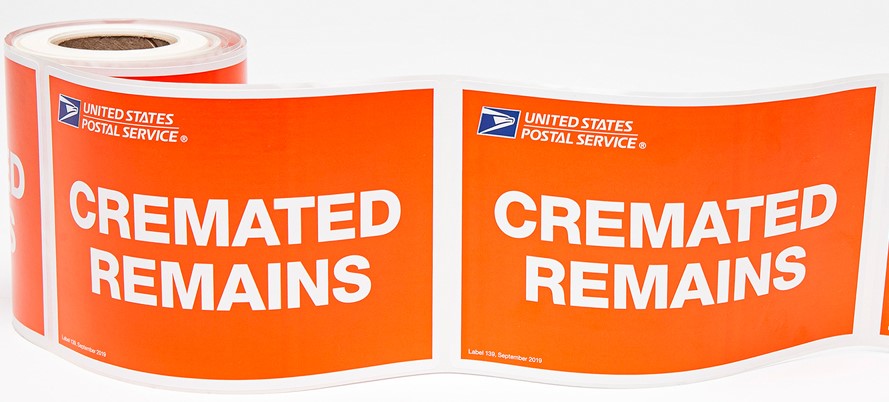
If you want to travel affordably with a real potential for adventure, you could do worse than waiting until you’re ashes – and get an insider view of the US Postal Service in the process. This opportunity could be yours with the purchase of Label 139. Cremated Remains.
(“Label 139” is a great name for a goth record label)
Amid covid and general changes in attitude, cremation (and the shipping of created cremains), has become much more common. Common enough that the USPS has had trouble keeping up with demands for the packaging.
USPS’s guide explains that the ashes must be packed in a “sift-proof container” – lest you risk having an inadvertent Aerial Scattering, the technical term for throwing ashes from a plane. Also, my second entry into the “death terms that should be band names by now”

As for adventure, there probably won’t be any. But you never know! The podcast Last Seen has an episode about the very roundabout journey one particular urn took.
It’s a great listen, no doubt because it’s a fascinating mystery. But it also shows how personal and biased we can be when it comes to the remembrance and memorializing. Every culture, every family, every person has a unique way of confronting grief and loss. And each person has their own idea of how they want to be remembered.
We rarely have control over our own memories, so it’s quite audacious to believe we can control others’… but we always try.
Man is a noble animal, splendid in ashes, and pompous in the grave.
Sir Thomas Browne
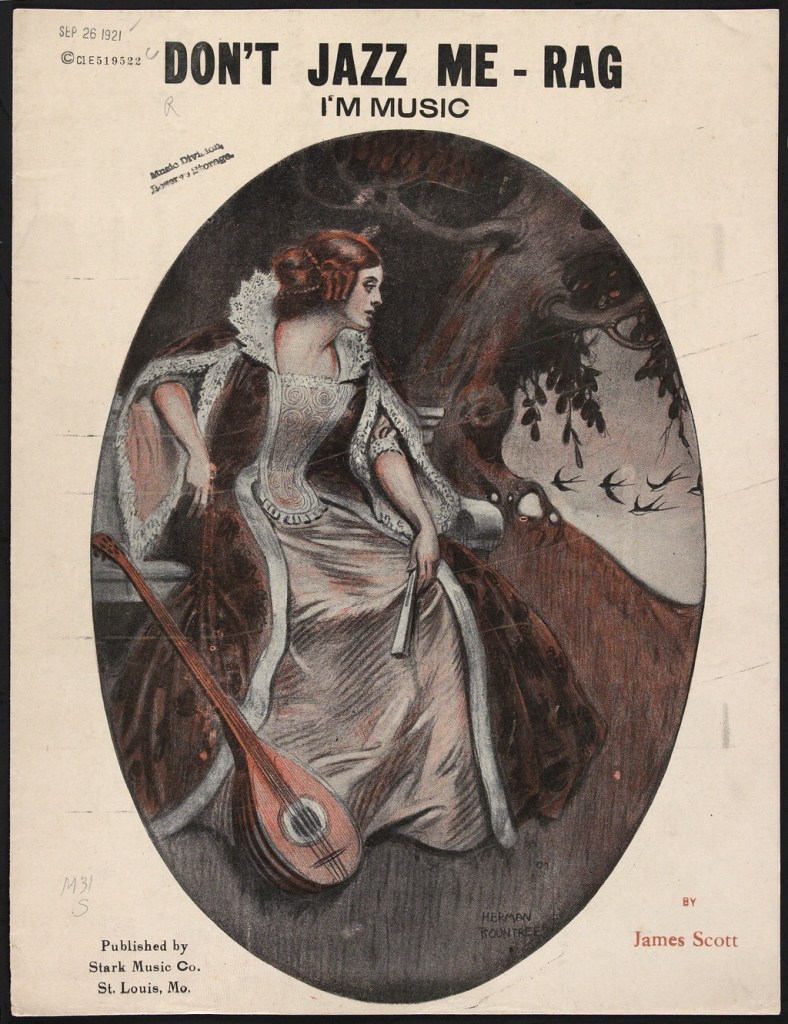
What is a rag?
(Musically speaking)
Initially I just wanted to post Sarah Cahill’s performance of “Be Kind To One Another (Rag)”. It’s a beautiful peace that I’ve listened to a fair amount recently, the world being what it is. I think it does a beautiful job of carrying multiple moods at the same time. It keeps moving forward steadily, while also hovering over unexpected notes of grief or joy or hope. And as the pace seems to slow, there is a liveliness to the music that never entirely dissipates.
And sometimes the mood and the pace and everything else click together in brief unity, before separating again and revealing the complexity of emotion. It gives brief form to feelings that are hard to grasp.
But I realized that I don’t quite know what a rag is. I could confidently say it was related to (or maybe the same thing as) ragtime. Which is jazzy. And old. Definitely old. Other facts about it were less clear and mostly just words and names … Joplin … Maple Leaf … syncopation … fixin’-to-die … The Sting … player pianos? Maybe?
So I did a little research and promptly got overwhelmed. It is the precursor to Jazz. That’s for sure. And Scott Joplin was the king of it. The rest gets blurry, partly due to my lack of musical understanding, partly because it’s just not all that clear.
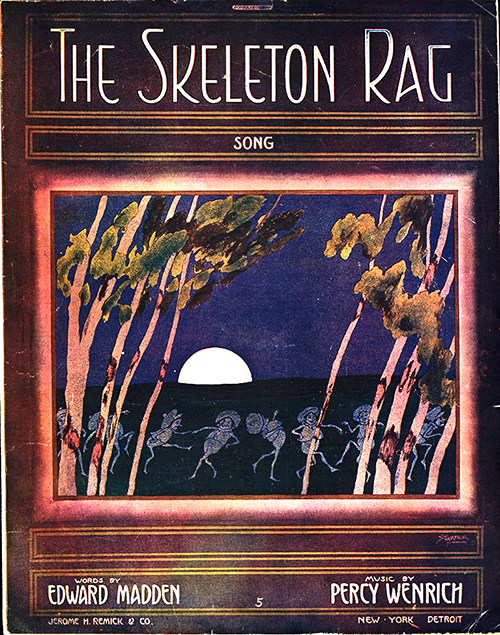
So I reached out to a friend who has the enviable skill of being able to understand and explain music. I asked him – What is a rag? (Followed by – Is Country Joe & The Fish’s “I Feel Like I’m Fixin’ to Die Rag” a rag? Short answer – not really*)
He explained ragtime as best as anyone can, with words like “duple” and “antecedent/consequent phrases” – I won’t trouble you with it, but it made enough sense when I was reading it.
More importantly, he made the point, “it’s one of the issues when a kind of music is made in the vernacular world. The same thing happened with Bill Monroe and Bluegrass. He made this new thing and then spent the rest of his life saying other people’s bluegrass wasn’t really bluegrass and that he doesn’t know why not except that he knows it when hears it.”
Poor guy.
So it can be hard to put your finger on. If only because the music evolved in many different directions, but it all retains this feeling of movement. And the best pieces can contain great depth of emotion. A somber piece can can contain notes of joy, while a very spirited piece can have a undercurrent of sadness.
Any effort to really hold on to a feeling is bound to be unsuccessful – the music keeps moving. It doesn’t care if it’s ragtime.
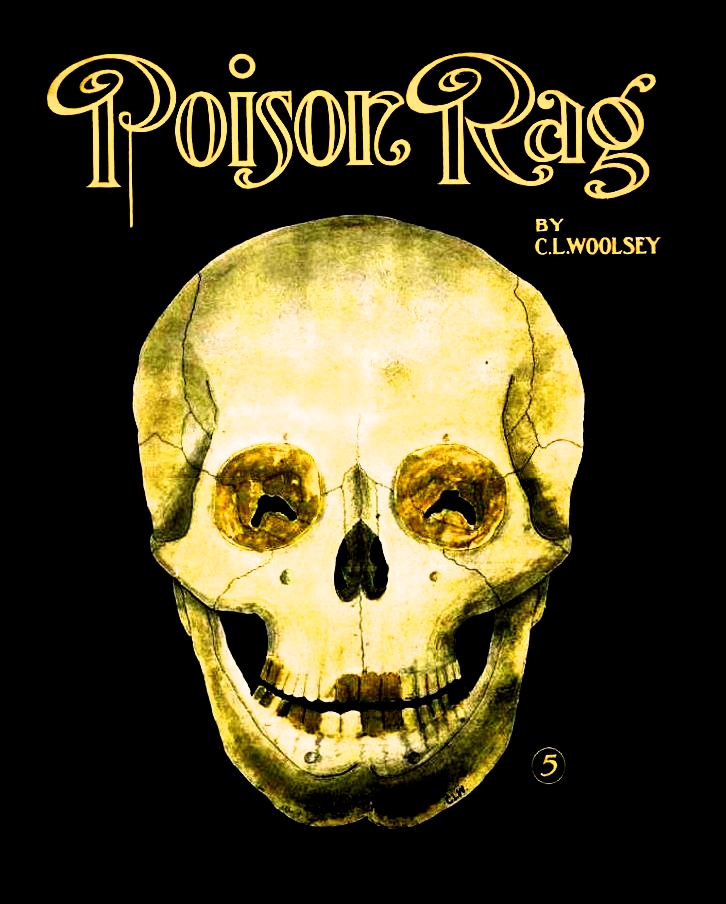
Perhaps there is something within the form that speaks to our efforts to grasp that which is beyond us – Terry Riley has another piece called “Premonition Rag” and William Bolcom has the absolutely beautiful Three Ghost Rags: Graceful Ghost, The Poltergeist, & Dream Shadows.
Emotions, music, mood, momentum – it can be hard to really grasp these things in a concrete way. But you don’t have to! Just Be Kind to One Another. Rag or otherwise.
*The word “rag” seems to have been thrown around a lot in the 60’s, with a variety of meanings. Country Joe’s song was recorded specifically for a magazine he produced called Rag Baby which was not about ragtime, unless ragtime’s definition now involves the 60’s leftist counterculture. Searching the internet for “Is ‘I-Feel-Like-I’m-Fixin’-To-Die Rag’ a rag?” is tough. There is also a chance that nobody cares.
 Death Becomes You