Auld Lang Syne and Farewells as old as Time

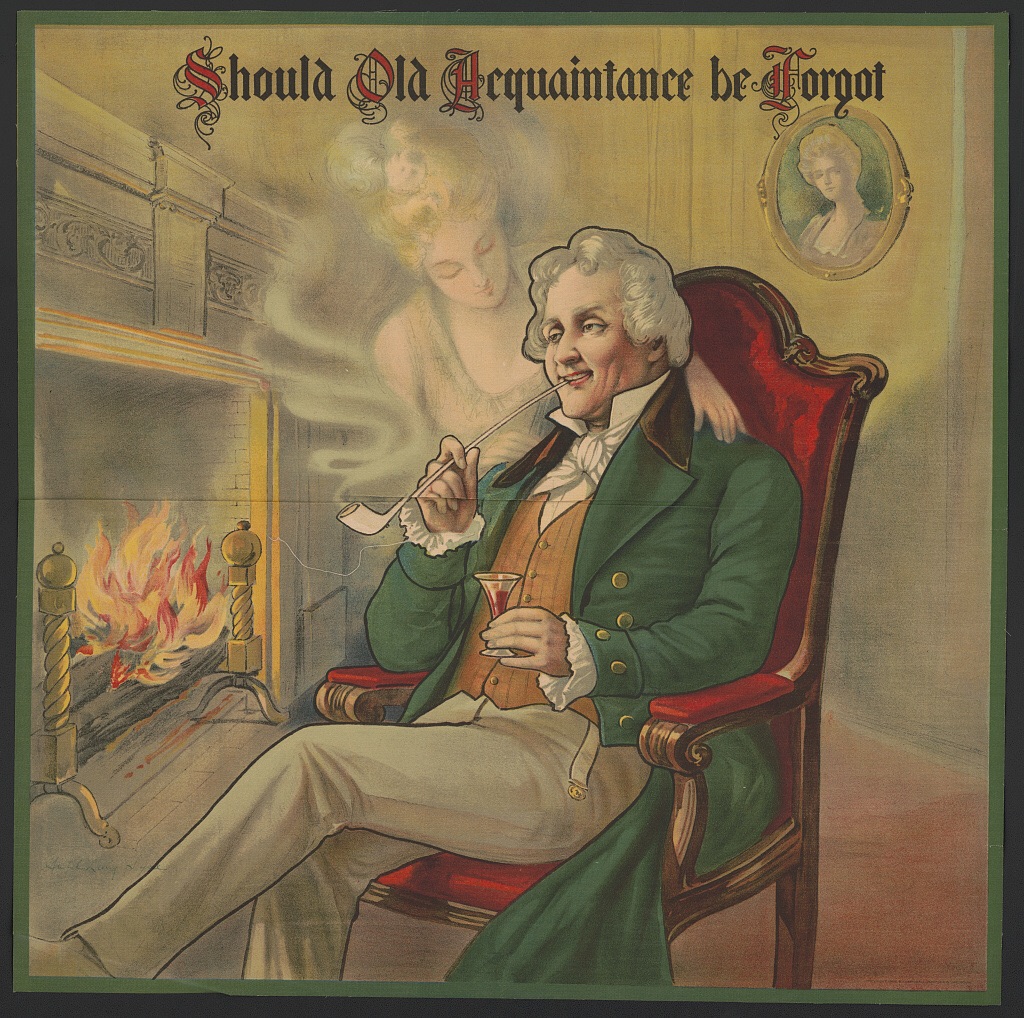
Chromolithographic print from 1905 titled “Auld Lang Syne”

While the flipping of the calendar year is often met with celebration, it is typically done while looking at hope and dreams of the future. And that makes sense – the past few years have been weird and rough for… (searches the internet) huh – everyone! Surviving another year inevitably feels like a victory. Even if we’re not sure what we’re looking forward to, we can at least say we got through what’s now behind us. Which is the standard order of things.

Because of that, there isn’t much celebratory “farewell” within our end of year bashes. But, in a lovely example of… irony? No. Self-reference? No. Circular something or other? Whatever… In a lovely example of being an example of itself, Auld Lang Syne, THE New Year song, is sung enthusiastically about remembering the good times and people that got us here. I’m not the nostalgic sort, but it’s great to have a very old song about remembering the past being used to remember the past. Was Auld Lang Syne ever a new song? It works so well as a farewell song because we haven’t said farewell to IT. How many people have sung the half-remember and hazily-understood lyrics and thought of a loved one? And now we all share the memory of using the very same song to connect with our very singular pasts.

And there’s a hand my trusty friend!

And give me a hand o’ thine!

And we’ll take a right good-will draught,

for auld lang syne.

(Standard English remix of the Robert Burns cover of Auld Lang Syne)

To be fair, it’s also a drinking song. That’s why we sing it. And perhaps the lyrics aim to fight the memory damage wrought by drinking.

It’s not an uncommon hear the song at graduations, weddings, and (obviously) funerals. It looks backwards, not with longing and regret, but with love and appreciation. A perfect way to enjoy a first/last moment of the year; the past celebrated, the present enjoyed, and the future unconsidered. And when you cast your mind back to times worthy of recollection, think of all the people in the past centuries who you’ve now shared a moment with. For auld lang sine.
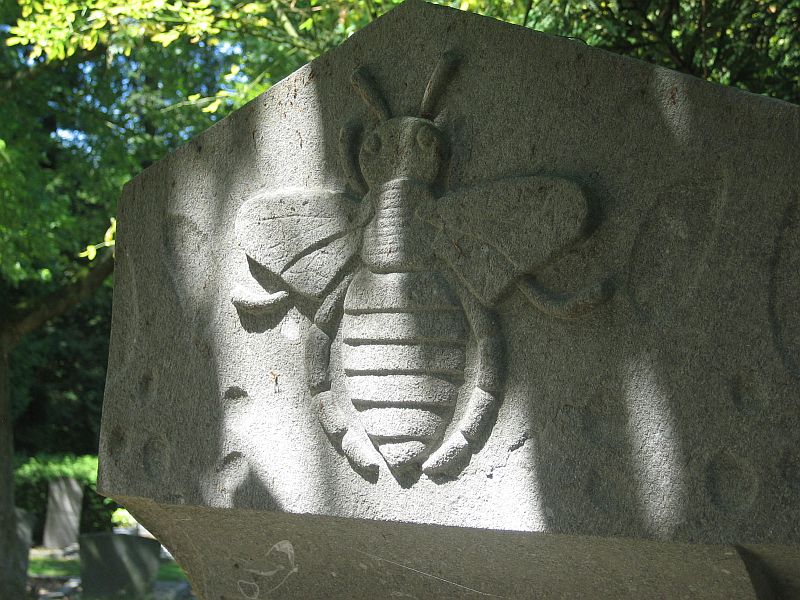
Death Bee-comes You!

Bee tombstone from the Bosdrift Cemetery in Hilversum (Netherlands). From Henk van Kampen’s flickr account

Humans and bees have long been intertwined in their lives (and their deaths) – From agriculture to society to religion, bees have been part of the story.

Humans keep looking to bees for answers and inspiration: The Fable of the Bees is a early 18th century version of Wall Street’s “Greed is good!” Drive around Utah, and you’ll see the hive everywhere, symbolizing industriousness, or, as initially was the case of the Mormons, the kingdom of God.

Above, a bee presents a honeycomb to the Olympian gods in the clouds; below, bees are flying into and out of two wicker beehives; illustration of a fable – Francis Barlow, 1668. Wellcome Collection

Unsurprisingly, bees have been wrapped up in death as well as life. And not just in their “killer” form. Nowhere is this better evidenced by the 18th and 19th century practice of Telling the Bees. In the United States (particularly New England) and Western Europe, if someone in the house passes away, the bees must be informed. You informed them? Great, now give them some time to mourn. Hives are covered with appropriately black cloth, giving the hive time to come to terms with the loss of a member of the family. There’s a whole poem about it, fittingly titled “Telling the Bees” (the fella who wrote the poem, John Greenleaf Whittier, was a pretty excellent Quaker Abolitionist, a member of the American Philosophical Society, and the writer of a poem that was incorrectly attributed to Ethan Allen for 60 years, I guess Mr. Whittier just never brought it up).

Bees handle death within their hive in their own way (no informing anyone, no mourning cloth). A small percentage of bees are “undertaker bees” – pulling dead bees out of the hive and dropping them a respectful (safe) distance from the hive. They are very quick – sometimes taking less than an hour to spot a deceased comrade and getting it out of the house. And curiously, they seem to be able to identify the dead bees by what they’re not giving off, which sounds very vibes based, but it’s not.


Bees by Sebastian. Brandt – 1580 – Wellcome Collection, United Kingdom

Bees are great. Any creature that can make a food that never spoils must be something special.

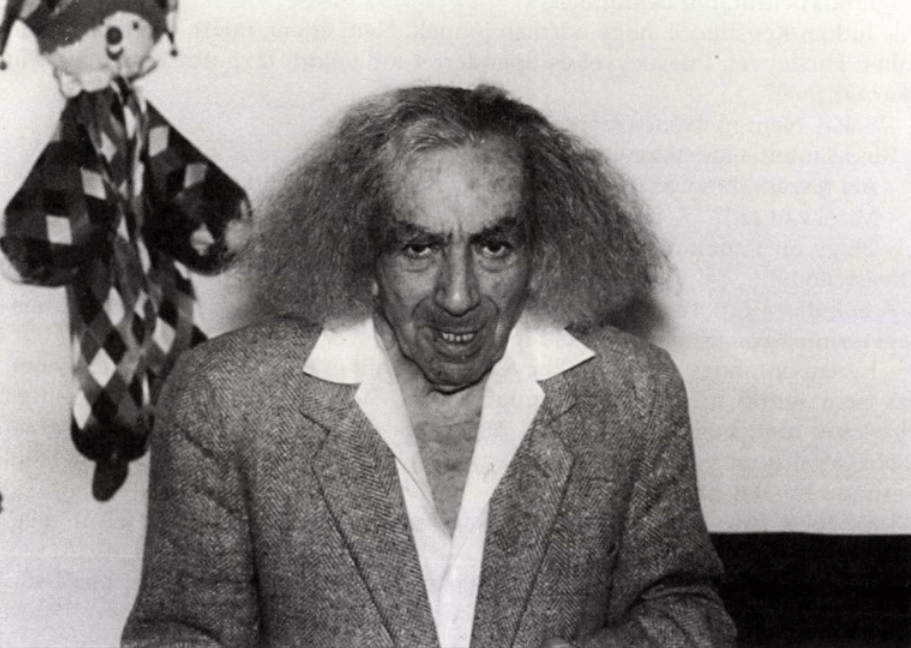
György Faludy lived.

In this town, I thought to myself, Death sits among the guests at every feast and lies in bed with the lovers. He is present, always and everywhere, like in the woodcuts of Holbein’s Totentanz, but not in the same capacity. In Holbein’s works Death is the uninvited guest whose appearance causes terror and vain despair. Here, he is not regarded as a trap to be avoided by clever men. Here, they do not expect to live to be a hundred and hope to live to be five hundred. Here, no one would dye his hair and beard at the age of fifty, do gymnastics with weights every morning to remain fit. Here they know that even health does not protect against death. Here, death is a welcome guest at the table of friends and when he sits on the edge of the lovers’ bed he does so only to inspire them to even more passionate embraces.

My Happy Days In Hell