
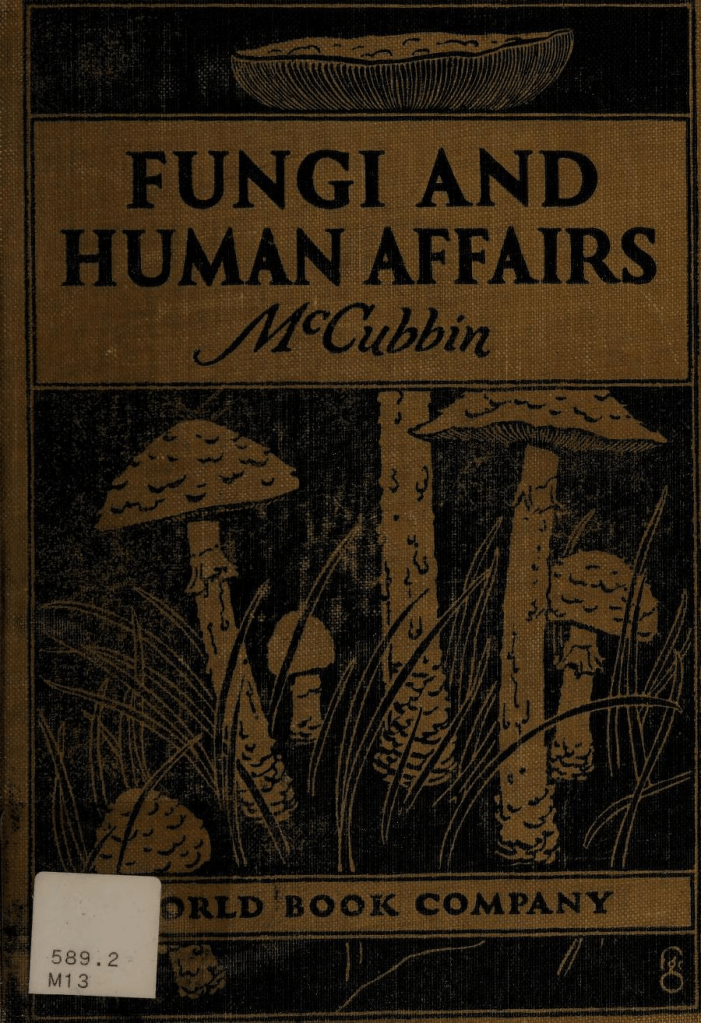
The start of 2023 found the State of New York joining Washington, Colorado, California, Oregon, and Vermont as a state that permits human composting. Pretty great! Better for the earth. More wholesome. Nice for the fungi.
Now, despite the fact that humans have been putting bodies in the ground regularly for -oh, I dunno – over 100,000 years, there’s scant history of using human remains as an agricultural resource. Compost Magazine (yes, really), found this quote from Plutarch observing the aftermath of battle (via Agricultural History magazine):
They say that the soil, after the bodies had rotted and the winter rains had fallen, was so fertilized and saturated with the putrefied matter which sank into it, that it produced an unusual crop the next season.
Greeks weren’t the only ones to take note, the Arabs did as well. Ibn al-‘Awwām wrote the Book of Agriculture back in the 12th century or so. He too noted that “blood has prodigious virtue to revive some trees and plants” – not getting too specific about what sort of blood we’re talking about.
Of a grimmer nature is the write-up from an 1822 edition of London’s Gentleman’s Magazine:
The Nautical Register says, that “It is estimated that more that a million of bushels of human and inhuman bones were imported last year from the continent of Europe, into the port of Hull. The neighborourhood of Leipsic, Austerlitz, Waterloo, and of all the places where, during the late blood war, the principal battles were fought, have been swept alike of the bones of the hero, and the horse which he rode. Thus collected from every quarter, they have been shipped to the port of Hull, and thence forwarded to the Yorkshire bone-grinders, who have erected steam-engines and powerful machinery for the purpose of reducing them to a granulary state. (…) The oily substance of the bone gradually evolving as the bone calcines, makes a more permanent and substantial manure than almost any other substance – particularly human bones.
With all this in mind, it’s nice to see the idea of human composting as a return to earth in a positive sense, bringing about new life. As long as you don’t have Ebola or tuberculosis, you too can become plant food! While still very much a niche industry, I think it’s a path worth pursuing. It’s more environmentally friendly than other methods – the carbon emissions from cremation are terrible, and the embalming chemicals in a buried body are good for nothing but preserving the body (and bad for just about everything else). Plus, what a nice “full circle” way to wrap up.
I’m still hoping for a sky burial (oh to be interred in an oxymoron…), but this is a good plan(t) B.


 Death Becomes You