The realizations that came to Einstein from science are life-affirming. This quote from a letter he wrote to a grieving friend is beautiful:
A human being is part of a whole, called by us the “Universe,” a part limited in time and space. He experiences himself, his thoughts and feelings, as something separated from the rest — a kind of optical delusion of his consciousness. This delusion is a kind of prison for us, restricting us to our personal desires and to affection for a few persons nearest us. Our task must be to free ourselves from this prison by widening our circles of compassion to embrace all living creatures and the whole of nature in its beauty.
Albert Einstein February, 1950 As published in The Quantum and the Lotus
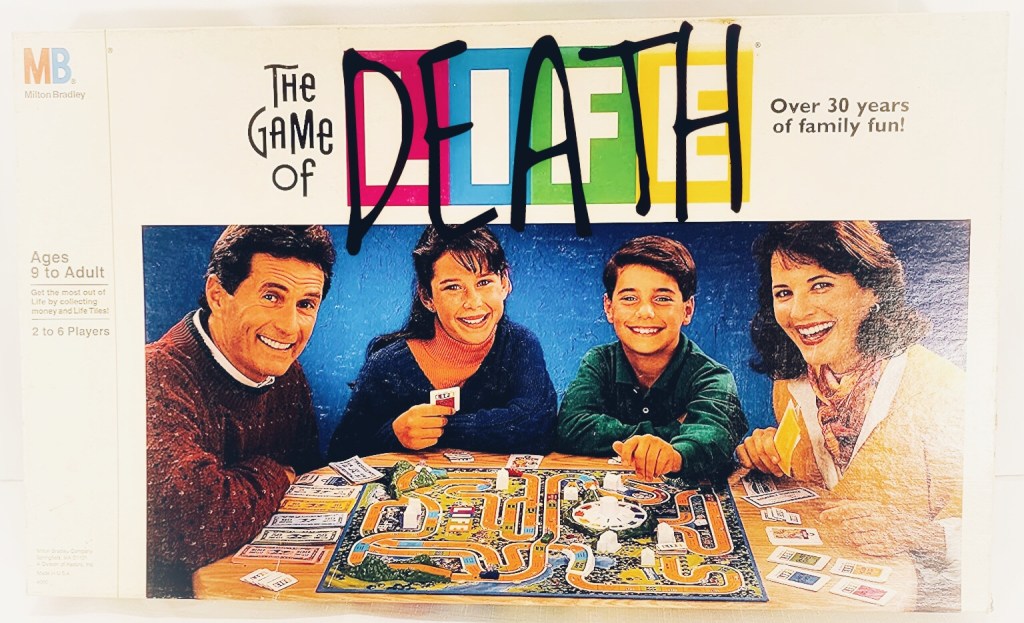
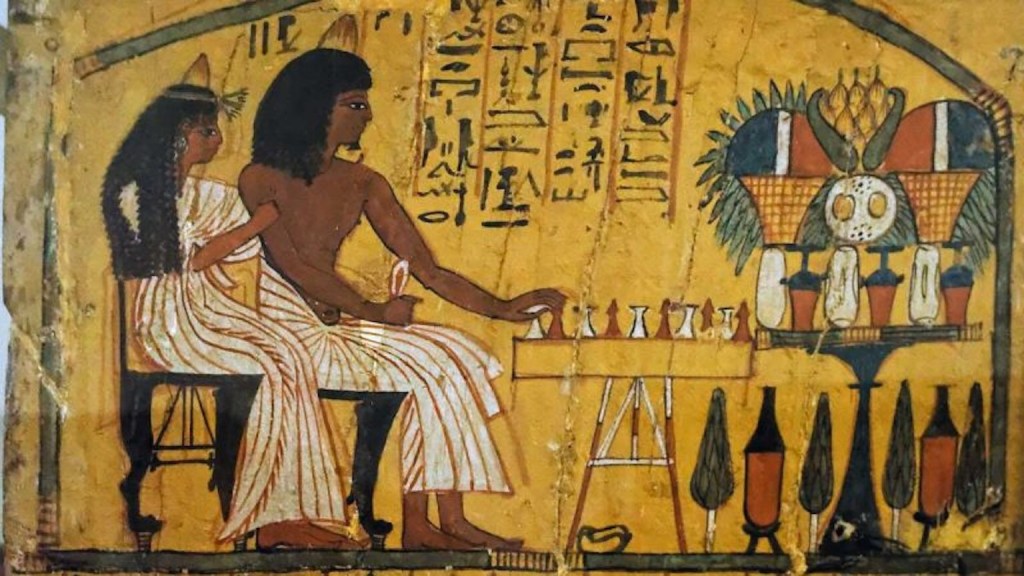
If you look up the ancient Egyptian board game Senet, you will find articles and essays referring to it as “board game of death” – as though that is the translation of “senet” (it is not – senet means “passing” or “afternoon”) or that the phrase “board game of death” is something we all know exists, but, like dark matter or bigfoot, we just haven’t seen it yet.
The game of death, but no die
Senet, starting around 5000 BCE, spent many years not being the “board game of death”, but rather just the board game. In fact, archaeologists think it was about 2,500 years into it’s life when it took on a religious significance and a connection to the afterlife. Unlike a Ouiji board, senet was a game – you didn’t need an afterlife or spirits to enjoy it. And unlike Tarot, which evolved from game to fortune telling, senet seems to have never stopped being a game, even if people stopped seeing it that way. Senet is not a really a fun friend who can also contact the dead, instead it’s more akin to a seventy year old man having a religious experience and then suddenly THAT’S his whole identity.
Board to death?
We also don’t quite know the rules, regardless of whether one is playing for fun or, I don’t know, soul (ka)? The vibe is backgammon-y, but there are some specifics we don’t know. Like, “what does the square with squiggly lines mean?” and “Do I play with or against my dead relatives?”
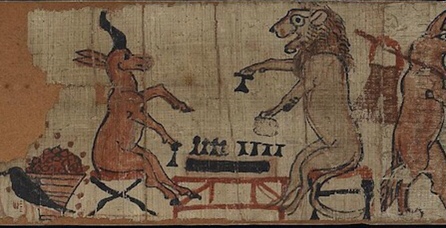
The game of death is for everybody!
Ancient Egypt was a world where religion and social life and culture were all intertwined, so maybe it isn’t so surprising that there is such overlap of the spiritual and the social. Is America ready for a ghost-hunter / poker tournament reality show? I’m thinking yes. Scared Straight, perhaps?
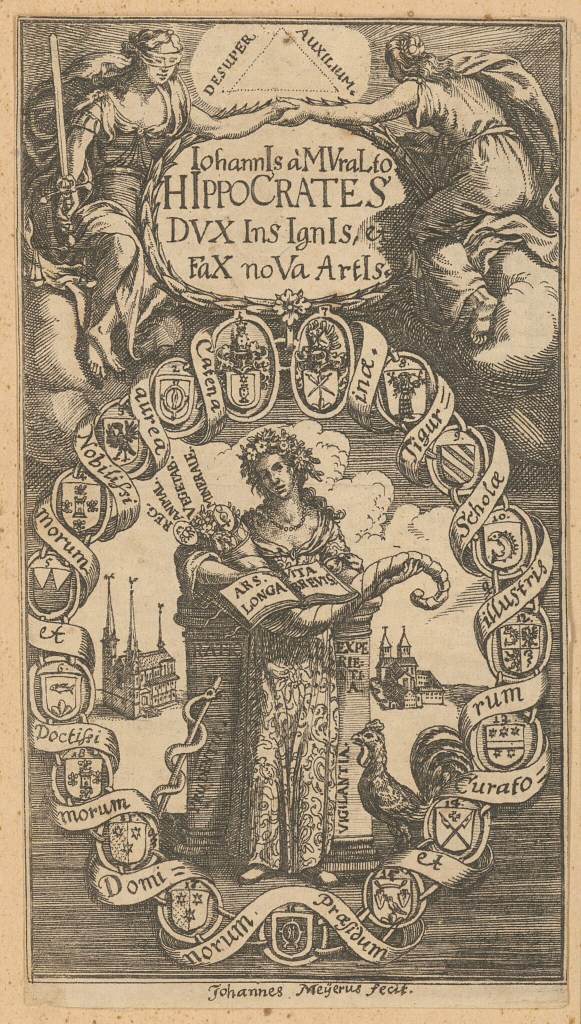
Johann Meyer: Iohannis à Muralto Hippocrates … (Basel, 1692)
Once again, my minimal effort to double-check a quote resulted in a lot more reading than I intended. That quote – “Ars longa, vita brevis” (Art is long, life is short) is just part of a longer quote by Hippocrates (the pater of medica himself!), and I think it’s out of context.
My read of the quote had always been along the lines of “the artist may die, but art will live beyond them” – but that doesn’t seem to be what Dr. Hippo wanted to get across. The whole quote:
“Ars longa, vita brevis, occasio praeceps, experimentum periculosum, iudicium difficile.”
“Life is short, the art long, opportunity fleeting, experiment treacherous, judgement difficult”
Notable is how one should define “art” – not in the sense of a work of aesthetic beauty, but art as in a craft or skill. This is not a grand proclamation about art outlasting life (which is fine sentiment), but instead an observation on how challenging it is to get anything done in this life. You’ve only got so many years – and learning takes a while, plus you’re only at your prime briefly (if at all), and you’ve got to trust yourself to not screw it up. Thanks doc! To be fair, he actually said this:
Ὁ βίος βραχύς,
ἡ δὲ τέχνη μακρή,
ὁ δὲ καιρὸς ὀξύς,
ἡ δὲ πεῖρα σφαλερή,
ἡ δὲ κρίσις χαλεπή.
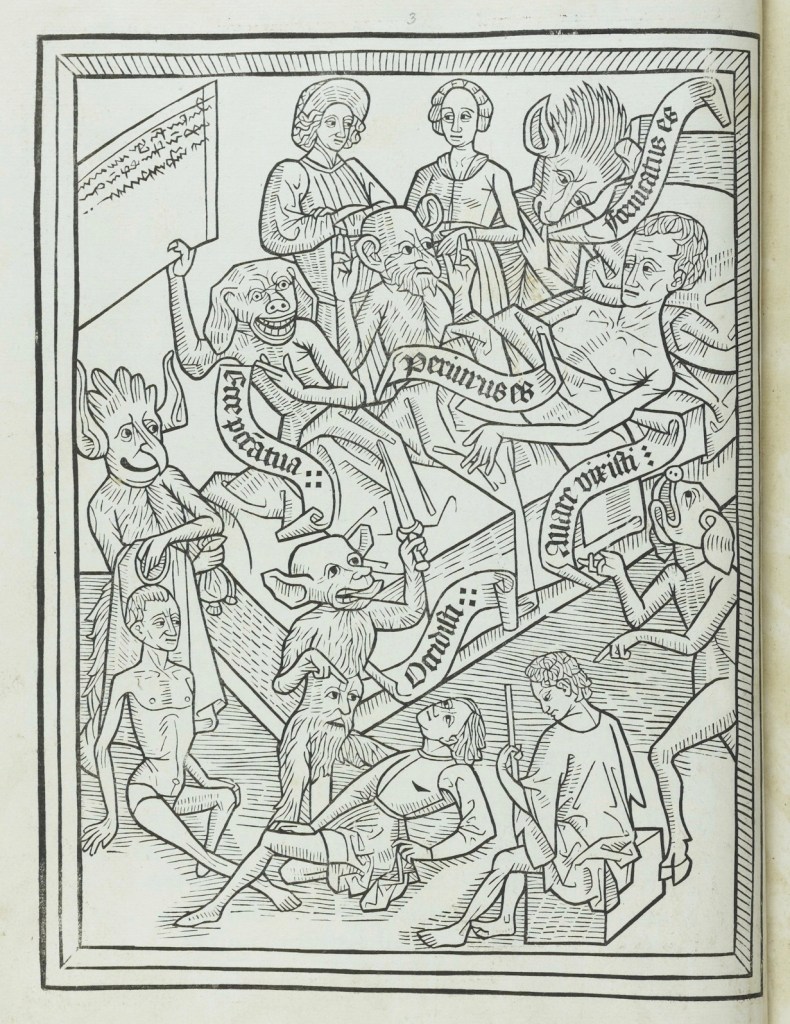
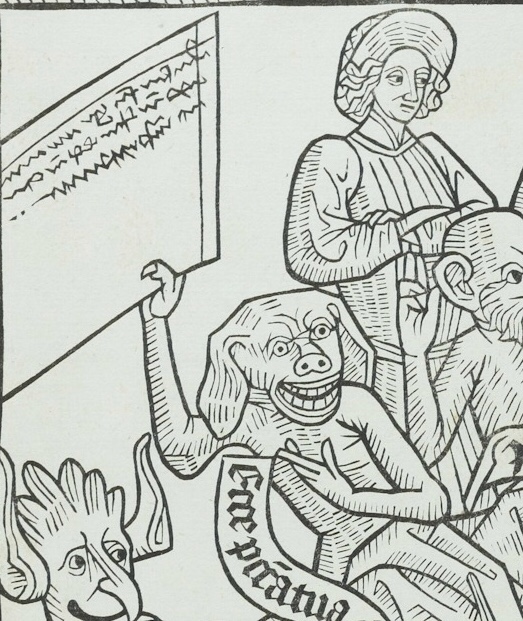
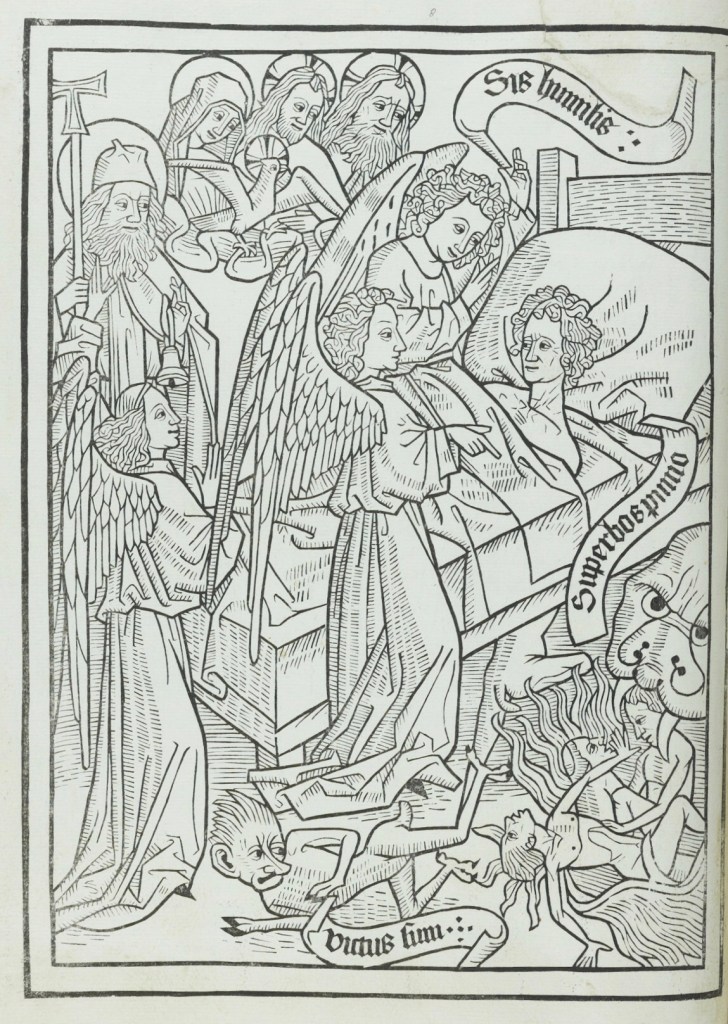
A few years later (roughly two thousand), a little book called Ars Moriendi was published. The Art of Dying – look at that correct usage of “art”. Not a great read – kinda cobbled together quotes from the bible and church fathers all about what to expect while dying, mostly in regards to temptations. But the woodcuts are a beauty to behold.
Demons! Temptations!
I’m a particular fan of the demon holding up cue cards… of the damned.
The book was written in the early 15th Century as a reaction to the Black Death from half a century before. Death was on the brain, and this book was not only to put the dying at ease, but also empowered others to help with the dying process, owing to a severe shortage of priests and other church certified folks who were those summoned to aid in the end of life.
Angels! Virtues!
Never hurts to start confronting death, wherever you are in life. So you can now quote me (in Latin):



 Death Becomes You