State Ultimatums. Or Else.

RIP Old Man of the Mountain (is that irony?)

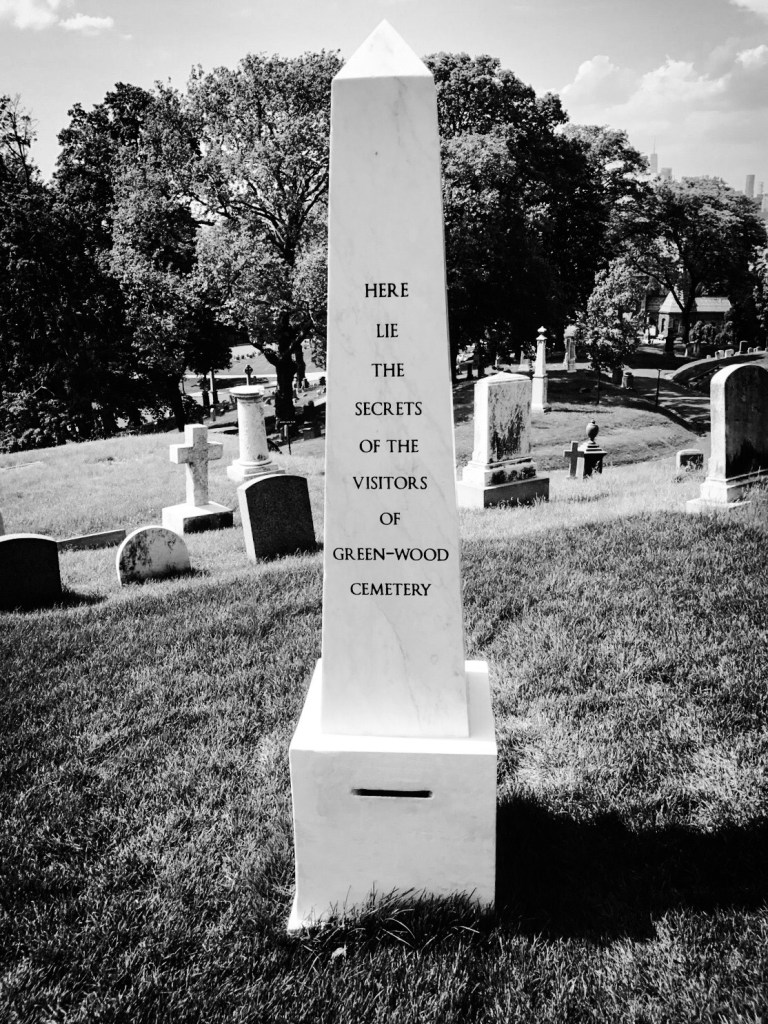
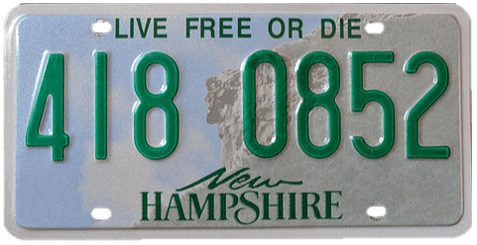
This past week I had the pleasure of traveling along the coast of New England, full of moss and cemeteries and boats and used book stores. Some vanity license plates that were a little off-putting (“GOTBO1Z” particularly stands out). And, of course, New Hampshire’s memorably license plate’d state motto Live Free or Die. Probably the most famous state motto. For good reasons, of course:

  1. It’s understandable
    • It’s in English, unlike, say Connecticut’s Qui transtulit sustinet (which doesn’t become cooler when translated, trust me)
    • A simple idea, whereas it feels like Illinois may have overreached with State sovereignty, national union
    • It’s a motto. This is critical. Some states may have missed this part of the assignment. (Tennessee? Agriculture and Commerce? Really?)
  2. It’s catchy! Iowa, I like where you’re coming from, but Our liberties we prize and our rights we will maintain just doesn’t roll off the tongue.
  3. It’s an ultimatum. No other state uses the word “OR” in their motto.
Very few countries use an “OR” – ultimatums are uncommon at best. Not unheard of though.

  1. The French First Republic’s motto was the ambitious Liberty, Equality, Fraternity, or Death. Good luck, am I right? Also, kinda makes me think of menu options, “Sourdough, Rye, Wheat, or White? Pick ONE.”
  2. Somewhat related, the area of Brittany in Northwest France went with Rather death than dishonour which is good, but just suggests a preference instead of a true ultimatum. Sure, I’d rather die than be dishounoured, if I had to choose. But that’s a big “if”.
  3. Cuba’s got a mouthful, with Homeland or Death, We Shall Overcome! Not bad, but feels like it would help to have more details or context.
  4. And of course Greece, the home of philosophers and philosopher killers: Ελευθερία ή Θάνατος (Freedom or Death)
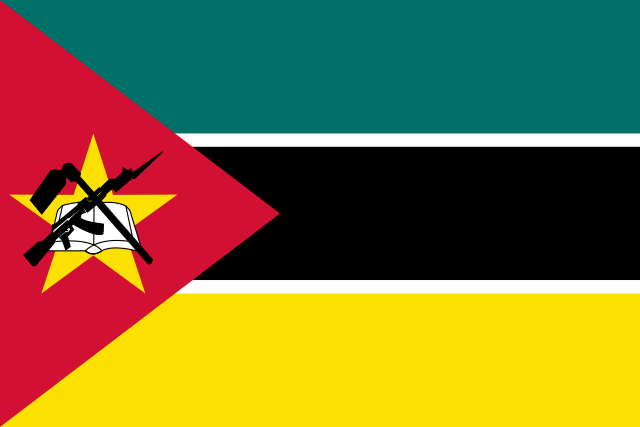
Mozambique doesn’t need a motto with a flag like that

The uniquely “American-ness” of the New Hampshire motto is partly due to the simplicity of it. To compare flags and mottos: while some flags have the color red to symbolize the bloodshed that earned freedom, Mozambique put a goddamn AK47 on the flag. Live Free or Die is the AK47 of mottos. And there is a “realness” to the statement that other mottos don’t quite capture – the true corporal element to living (free or otherwise) and dying. No abstract ideal of “liberty” or concept of “death”.

Of note: In 1977 the New Hampshire Supreme Court ruled in favor of a Jehovah’s Witness who covered up “or die” on his plate, claiming it violated his religious beliefs. And, according to Wikipedia, a much stupider (but related) case came up a decade later:

In 1987, when New Hampshire introduced new plates with a screened design that had the slogan lightly written on the bottom, some residents complained that the slogan was not prominent enough. One resident cut out the slogan from an older plate and bolted it on the new plate, and was prosecuted for it. The courts ruled in the driver’s favor, presumably basing it on the decision in Maynard.

Of note part II: For what it’s worth, in both 2019 and 2020, New Hampshire saw more deaths than births. FREEDOM!
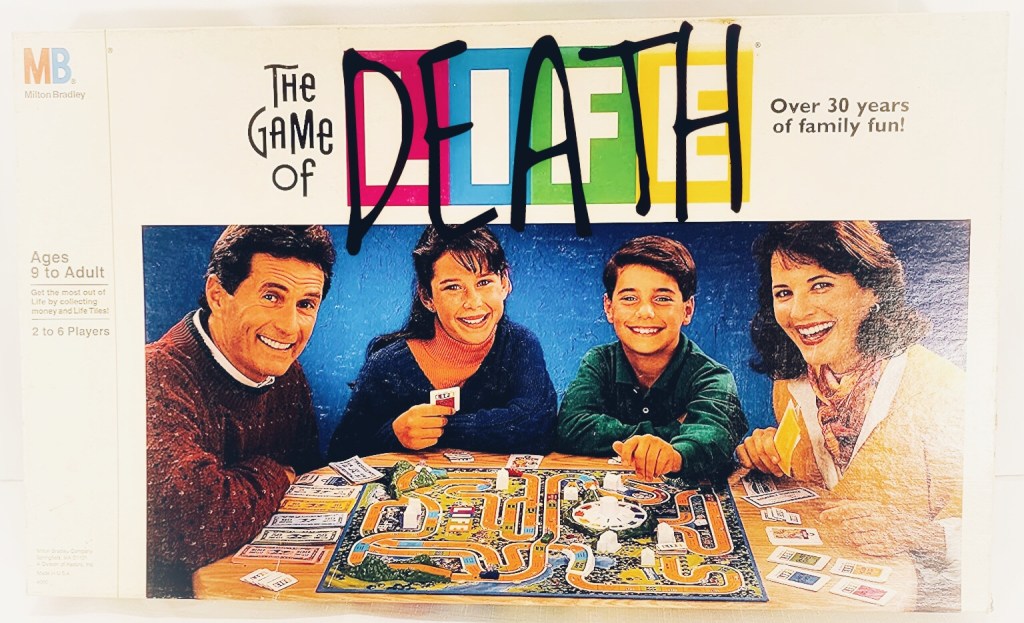
The Game of Death

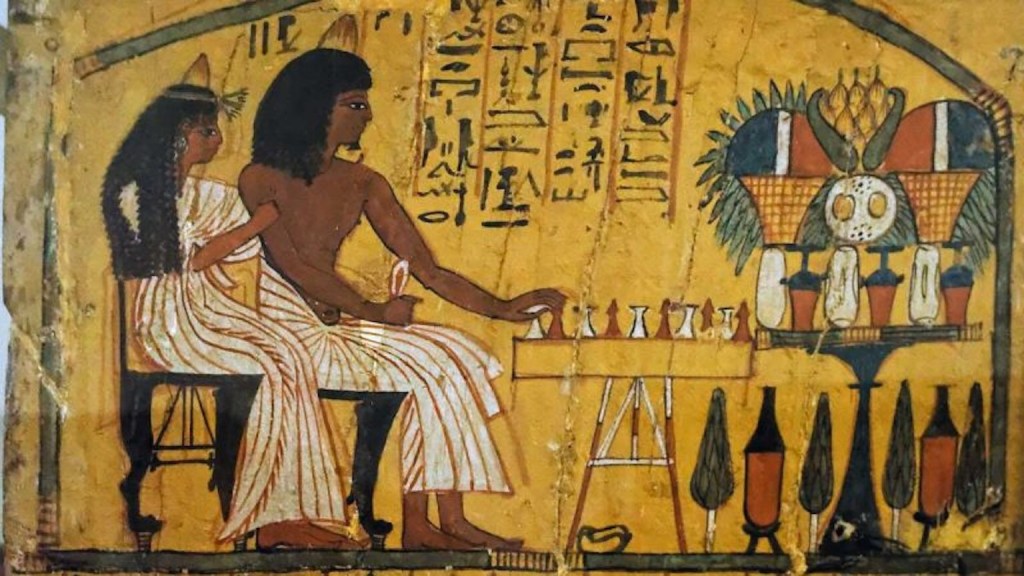
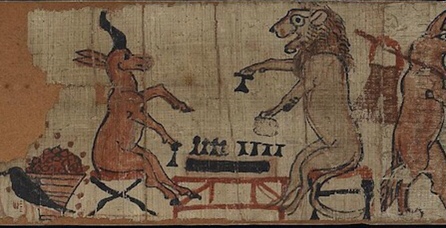
If you look up the ancient Egyptian board game Senet, you will find articles and essays referring to it as “board game of death” – as though that is the translation of “senet” (it is not – senet means “passing” or “afternoon”) or that the phrase “board game of death” is something we all know exists, but, like dark matter or bigfoot, we just haven’t seen it yet.

The game of death, but no die

Senet, starting around 5000 BCE, spent many years not being the “board game of death”, but rather just the board game. In fact, archaeologists think it was about 2,500 years into it’s life when it took on a religious significance and a connection to the afterlife. Unlike a Ouiji board, senet was a game – you didn’t need an afterlife or spirits to enjoy it. And unlike Tarot, which evolved from game to fortune telling, senet seems to have never stopped being a game, even if people stopped seeing it that way. Senet is not a really a fun friend who can also contact the dead, instead it’s more akin to a seventy year old man having a religious experience and then suddenly THAT’S his whole identity.

Board to death?

We also don’t quite know the rules, regardless of whether one is playing for fun or, I don’t know, soul (ka)? The vibe is backgammon-y, but there are some specifics we don’t know. Like, “what does the square with squiggly lines mean?” and “Do I play with or against my dead relatives?”

The game of death is for everybody!

Ancient Egypt was a world where religion and social life and culture were all intertwined, so maybe it isn’t so surprising that there is such overlap of the spiritual and the social. Is America ready for a ghost-hunter / poker tournament reality show? I’m thinking yes. Scared Straight, perhaps?

Death Bee-comes You!

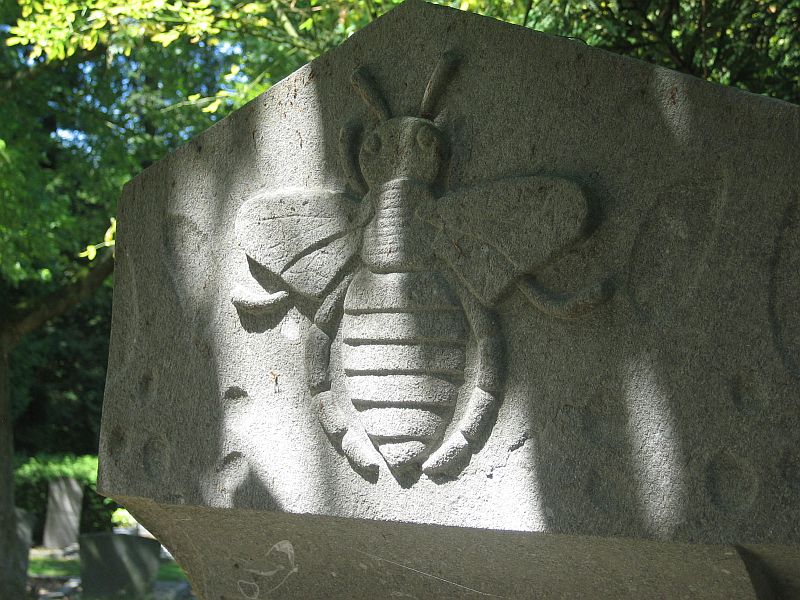
Bee tombstone from the Bosdrift Cemetery in Hilversum (Netherlands). From Henk van Kampen’s flickr account

Humans and bees have long been intertwined in their lives (and their deaths) – From agriculture to society to religion, bees have been part of the story.

Humans keep looking to bees for answers and inspiration: The Fable of the Bees is a early 18th century version of Wall Street’s “Greed is good!” Drive around Utah, and you’ll see the hive everywhere, symbolizing industriousness, or, as initially was the case of the Mormons, the kingdom of God.

Above, a bee presents a honeycomb to the Olympian gods in the clouds; below, bees are flying into and out of two wicker beehives; illustration of a fable – Francis Barlow, 1668. Wellcome Collection

Unsurprisingly, bees have been wrapped up in death as well as life. And not just in their “killer” form. Nowhere is this better evidenced by the 18th and 19th century practice of Telling the Bees. In the United States (particularly New England) and Western Europe, if someone in the house passes away, the bees must be informed. You informed them? Great, now give them some time to mourn. Hives are covered with appropriately black cloth, giving the hive time to come to terms with the loss of a member of the family. There’s a whole poem about it, fittingly titled “Telling the Bees” (the fella who wrote the poem, John Greenleaf Whittier, was a pretty excellent Quaker Abolitionist, a member of the American Philosophical Society, and the writer of a poem that was incorrectly attributed to Ethan Allen for 60 years, I guess Mr. Whittier just never brought it up).

Bees handle death within their hive in their own way (no informing anyone, no mourning cloth). A small percentage of bees are “undertaker bees” – pulling dead bees out of the hive and dropping them a respectful (safe) distance from the hive. They are very quick – sometimes taking less than an hour to spot a deceased comrade and getting it out of the house. And curiously, they seem to be able to identify the dead bees by what they’re not giving off, which sounds very vibes based, but it’s not.


Bees by Sebastian. Brandt – 1580 – Wellcome Collection, United Kingdom

Bees are great. Any creature that can make a food that never spoils must be something special.