A time to harvest, a time to fall

A very temporal album

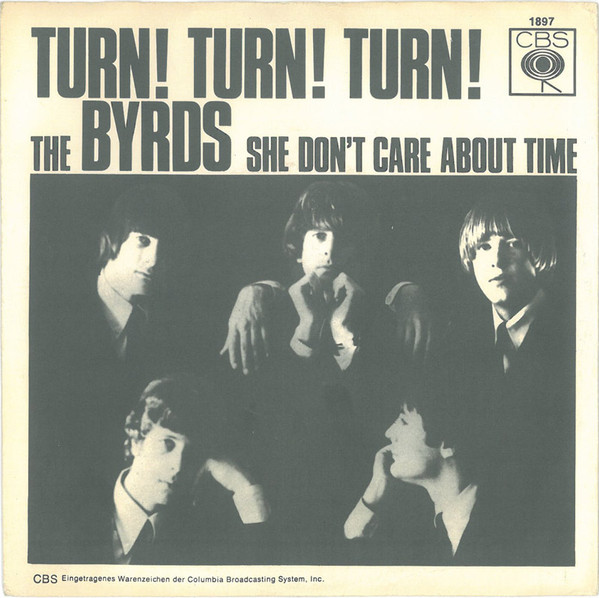
Best said by Ecclesiastes through Pete Seeger1 to the Byrds – 

To everything (Bible)
Turn, turn, turn (Seeger)
There is a season (Bible)
Turn, turn, turn (Seeger)
And a time to every purpose under Heaven (Seeger Bible)

The seasons are turning! Autumn is in the air and I am delighted. There are so many visceral joys of the season – the crisp air hitting your nose in the morning, the satisfying crunch of walking through leaves, not to mention the wonderful crunch of a crisp apple, as well as the many things that don’t involve “crisp” or “crunch.”

But my love of autumn is related to both to the immediate feeling of the season as well as what it represents.

The true beauty of autumn is its ephemerality. It’s a season in constant movement. If you want summer heat all the time – deserts and beaches are ready and waiting for you. Love the verdant growth of spring? Rain forests should do the trick nicely. And winter locations are both plentiful and obvious. But you can never have Forever Fall (TM – Emo band name). The season of autumn is the feeling of change, that’s its essence! It is the season where the passage of time can be easily witnessed in the nature. Death is part of the story. So is preparation. And rejoicing. Autumn has it all.

For the better part of the past 1500 years in the western world, Fall/Autumn was called “Harvest” – it was the season and the activity (“I summer at the shore, but harvest at the farm”). Harvest was a big part of life for most – reaping what you sow was never more literal. It’s the time of year for the farmer to collect crops and slaughter animals and celebrate! But also there is cleaning and preparing. Ensuring the winter will be survivable and the spring will be ready. You don’t just reap and quit! And you don’t skip reaping one year just because it’s not what speaks to you! Harvest is part of the cycle of life!

And much like autumn itself, reaping is best enjoyed contextually. Its highs are higher when considered what comes before and after. You’ve gotten through the hard work of spring and the hot work of summer. And you know you’ll have to prepare for winter. But take a minute to gather and enjoy your success.
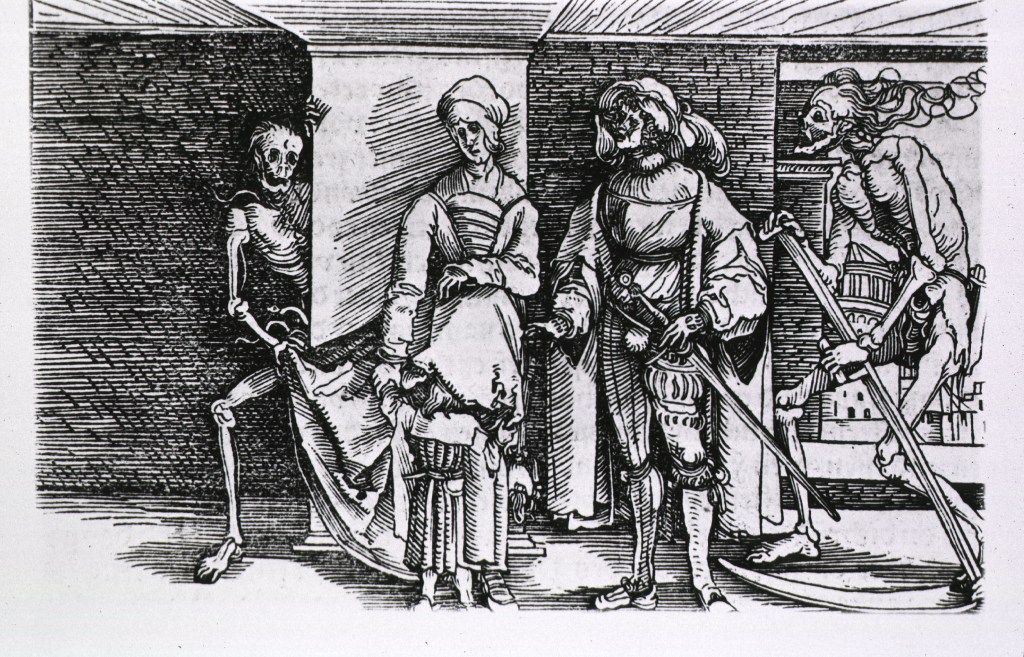
Dance of Death
Petrarca, Francesco, 1304-1374

As people moved away from farming life, the term Harvest dropped away as well, to be replaced by greater usage of the word autumn and the new usage of the word Fall (apparently short for “Fall of the leaf” – so that’s… fine). But with the use of fall, the cyclical context of harvest began to drop away as well. The skeleton that had long represented death was no longer a psychopomp and part of the wheel of life, it instead becomes the Grim Reaper, a haunting figure to be avoided at all costs. He reaps only in the greedy, capitalist way – taking without ever having sown and with no plans to plant. Pete Seeger (and probably the Bible) would not be on board. As Mr. Seeger said, “To My Old Brown Earth”

To my old brown earth
And to my old blue sky
I'll now give these last few molecules of "I"

People tied to labor -whether during the middle ages, the industrial revolution, or the modern age- seem to have a more holistic connection to death. A better understanding of their place in the greater cycle of things. Joe Hill, labor activist and songwriter in the early 1900’s, was a key contributor to the Little Red Song Book (one of Seeger’s favorite books). His last contribution to the book was his own will, written the form of a song (a practice that never really took off, best I can tell):

My will is easy to decide
For there is nothing to divide
My kin don't need to fuss and moan
"Moss does not cling to rolling stone"

My body? Oh, if I could choose
I would to ashes it reduce2
And let the merry breezes blow
My dust to where some flowers grow

Perhaps some fading flower then
Would come to life and bloom again.
This is my Last and final Will.
Good Luck to All of you
Joe Hill

Autumn is a season that shows how death has a place within our world as a part of life – not outside of it. Fall is fleeting – but what isn’t? Ecclesiastes says it best: A time to dance, a time to mourn

  1. Mr. Seeger was reasonable about his claim to authorship – splitting the song royalties 55% / 45% with the Israeli Committee Against House Demolitions. In a 2002 interview with Acoustic Guitar magazine, Pete Seeger said, “With ‘Turn, Turn, Turn’ I wanted to send 45 percent, because [in addition to the music] I did write six words (“I swear it’s not too late” at the end) and one more word repeated three times, so I figured I’d keep five percent of the royalties for the words.”​ ↩︎
  2. And cremated he was! On January 3rd, 1917 his ashes were sent out in 600 envelopes to fellow activist and sympathizers, with his remains being cast to the four winds, minimum ↩︎
On the growing rarity and important communion of shared grief (AKA “I went to summer camp!”)

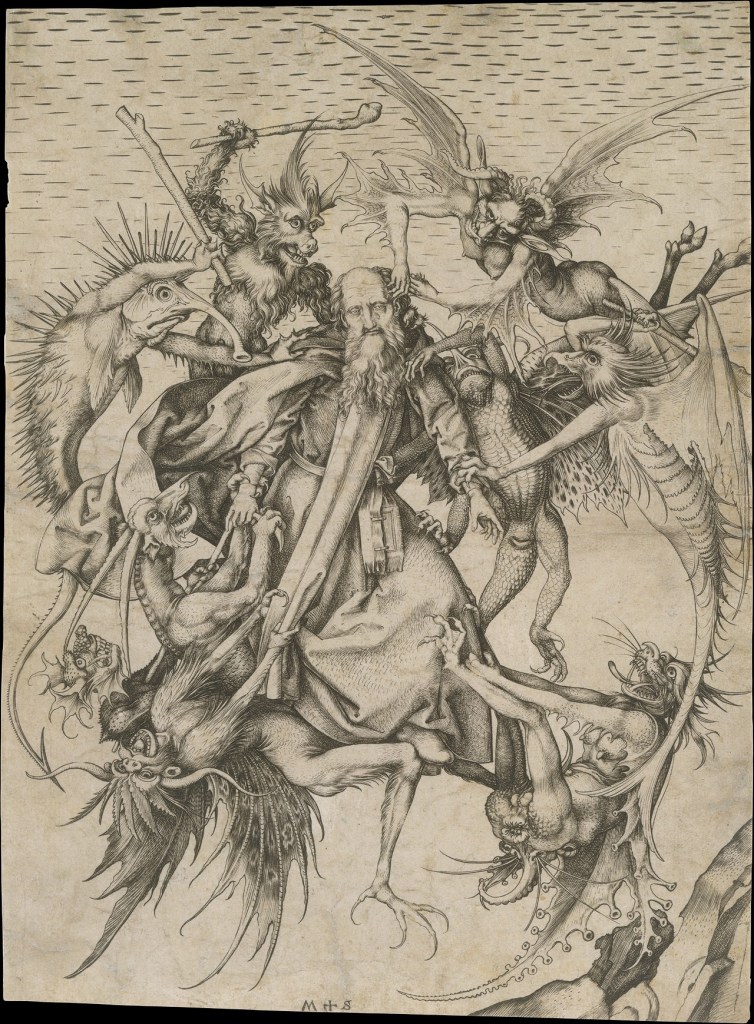
Camp Counselor (Saint Anthony) Tormented by Kids Wanting to Stay Up Late (Demons)

Death is part of life. All life. Everyone’s lives. We all share it in the biggest sense – like we all share a need for oxygen and a dislike of traffic (but not Traffic). But it’s also something we rarely share. This wasn’t always the case, and sometimes still isn’t – some cultures continue to celebrate death anniversaries and honor the dead collectively. But overall, the western world rarely communes on this particular shared experience.

That’s a shame. Loss and grief can transcend most differences; sharing the feeling (or just knowing others are also trying to cope) can make it much more manageable.

I turn to Emily Dickinson’s “I Measure Every Grief I Meet” for a sense of that shared bond, despite the fact that each person’s grief is a different age, shape, texture. It begins:

I measure every Grief I meet
With narrow, probing, eyes –
I wonder if It weighs like Mine –
Or has an Easier size.

I wonder if They bore it long –
Or did it just begin –
I could not tell the Date of Mine –
It feels so old a pain –

I’ve been thinking of this lately on account of my week at summer camp. Any adult who spends time at a summer camp (I was volunteering as a counselor) will almost certainly confront their mortality. The teenagers, as is their right, behave as though they are immortal, motivated by need for clout and their onset horniness. I was once one of those teens – life was not the opposite of death, but simply all there was. Death was for other, older people. No tree too high climb or hill too steep to ride down. This year, through counselor-tinted lenses, I instead think it might be good to have everyone wear life jackets – at the lake, sure, but maybe the in the pool, and just to be safe, in the shower too. But I held back and did let teenagers be.

It’s worth noting that this was a unique camp, exclusively for kids who’ve lost a parent. So death was very present, but often in the background. And rarely did it get in the way of teenagers being, well, immortal teenagers.

Whiffed

It was a week of aiming to have a very normal summer camp despite what these kids are going through. Losing a parent is tough at any age. But that is only exasperated by a society that avoids any sort of acceptance of death in the course of everyday life. To lose a parent early in life is tragic. And the absence of death as a topic of conversation for both kids and adults means most adults are unprepared to deal with death themselves, let alone help a child through it. Without a guide, a kid doesn’t know how unique and universal their grief is. They don’t realize that this burden that can be shouldered by many, but is instead siloed off to be dealt with individually. One week a year, kids get to hang out with others in the same boat. I’m glad this camp exists. But it’s a bummer this camp needs to exist. Many of the counselors are former campers themselves. Or people who lost a parent and wished for a camp like this all those years ago.

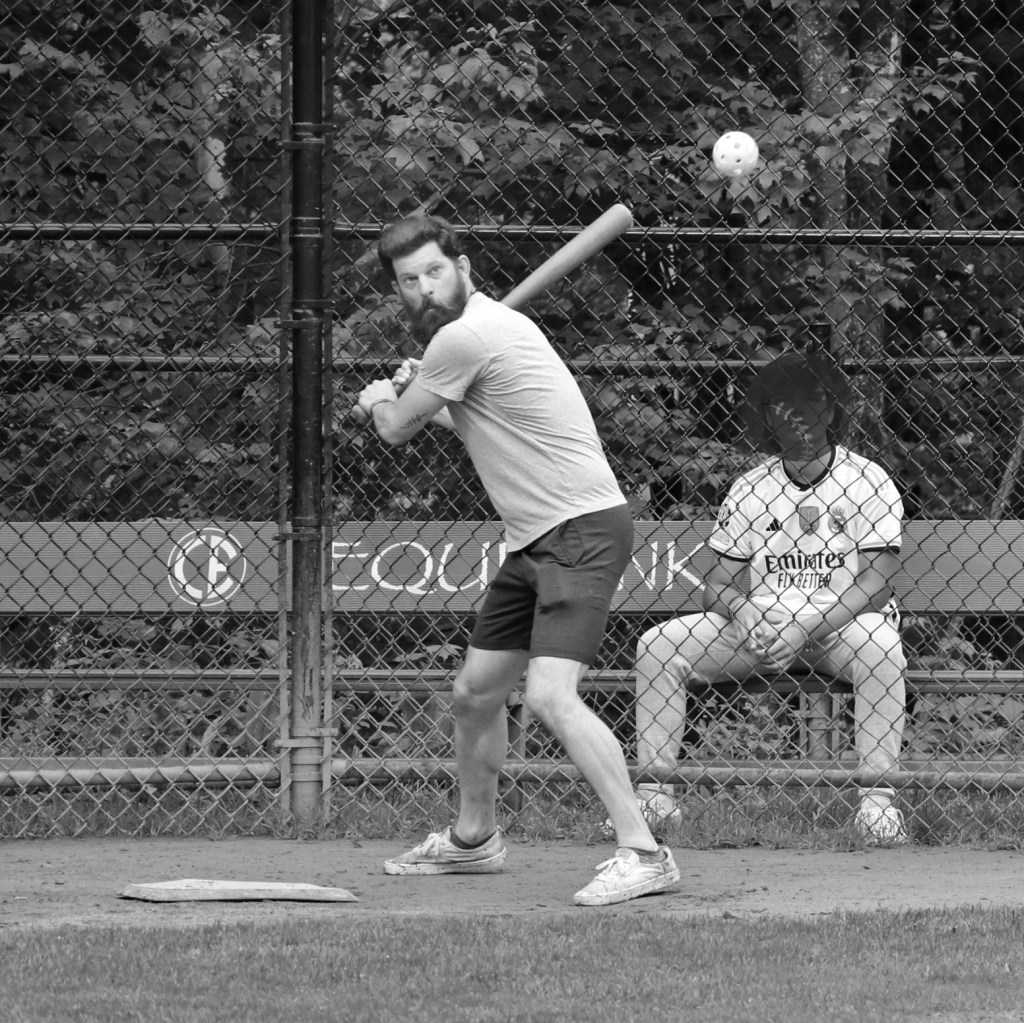
It was a wonderful experience for me as well as all the campers. It was a great chance for these kids to feel at ease in expressing their grief and sadness. And just as importantly, a chance for them to not feel like they have to explain things, have weird conversations, and make others feel uncomfortable on account of their loss. I had one hell of a great time with the kids. We talked about sports, school, death, video games, music, and camp drama. I was bad at whiffleball while still looking like a fairly competent athlete. I was giddy going down a loopy waterslide. I fist-bumped with so many kids and felt great about myself as a result (honestly, I would sign off on a teen giving people fist-bumps at subway stations as a public service).

The kids that I primarily worked with were too old to care much about a playground we walked by most days, but sometimes a couple kids would run ahead and jump on the swings. Old, legacy swings – simple rubber U for a seat. Heavy duty chains bolted to a large and sturdy wooden frame. Fond memories of pumping my legs to get as high as possible – and then feeling the chain go slack, briefly, in free fall. Eventually I’d launch myself off, woodchips embedded in my palms from the landing. Now I’m in charge. And I really didn’t want the kids to play on it. They could get hurt! But that’s similar logic to keeping kids shielded from the reality of death by not talking about it. They’re too young and sensitive. Will “jumping off a big swing” be a useful skill later in life? No. But might we see an increase in confidence? Enthusiasm? Lust of life? Seems worth it. And acknowledging death as part of life doesn’t make death “easy” – but it does mean there’s understanding and confidence. These challenges of life can unite us more than leisure activities ever could. For the kids at camp, it was a rare opportunity for teenagers to be simply be teenagers – bonding on the struggles of growing up – looking to fully embrace life while still reckoning with death.

Perpetual self-care (Sweating in the cemetery)

I volunteered at Green-Wood Cemetery this past weekend. I spent the hot and muggy morning weeding and mulching and sweating and thinking. A graveyard is a relaxing spot for gardening.

There’s probably some lesson or metaphor within the activity of pulling living weeds out of the same spot we are regularly depositing dead people. It’s hard not to think about how we, in our very human (and arguably unfair) way, make the declaration of what is a “weed”. It turns out, in this case, it’s Bermuda Grass. Particularly amusing because of our close proximity to the Caribbean neighborhood of Flatbush and the proliferation of these-can’t-possibly-be-legal weed shops.

So I focus my weekend energy on the weeds – pulling them up so that some other plants have a better shot. And I think it’s this orderliness that often draws us to cemeteries. The unpredictability of death and our inability to make it stick to our schedule results in a whole flurry of organization once life is over. That’s when we have a chance to wrap our hands and heads around it – living is changing, and it’s quite a challenge to organize something that keeps changing. 

So it’s little surprise that we see such orderliness in cemeteries and memorials, crypts and tombs. It’s particularly telling that “mass graves” are a true sign of butchery and horrors of war – a lost last chance to tidy things up and honor those gone. While death continues to frustrate efforts at an orderly life, we humans jump at the chance to categorize (living vs. dead) and organize (cemetery, block, plot, etc). Of course, there are those who have no interest at all these things, post-life. For there are those who admirably go so far away from organization- wishing one’s body fully back to the earth, as if to say, “well, clearly my way of organizing the world is now irrelevant; nature, back to you!” Ashes to ashes. Mulch to mulch. A magnet to the hard drive. Death isn’t the hands of a clock stopping. Death is the absence of those hands at all. That person no longer exists in time. A zombie or vampire is scary for many reasons – but I’d argue that one of the most troubling elements is a person changing AFTER death. How could it still be them? When a person dies, they are frozen in time. Death should provide the final image, a cessation change of “who a person was”. Ghosts, angels, spirits – they do not exist in time the way the living do. For the believer, it would be silly to envision an ancestor’s ghost getting “older” or an archangel coming down a little worse for the wear after all these years. The corporal part can do nothing after death but decay… why would we want to bring that back?!

In short time, weeding had my very real and physical body covered in perspiration. I’d hazard to guess my mental state was a little sweaty as well. I decided to sit for a moment near the pond. The fountain sprung to, well, not life, as it were – but the fountain started fountaining away. Dragonflies zipped about with their overaggressive maneuvers, no doubt because they can never put those wings away. I later looked up “Dragonfly symbolism” to see how it might relate to death. And, like every symbol – it depends on who you talk to. Which I guess serves as symbolism itself. What’s a weed? What’s death? What’s a dragonfly mean? Those are very human questions. Most questions are.

Soon I was back to battling the tenacious Bermuda grass. I was helping a young tree, itself a growing reminder of a loved one no longer on our timeline. I noticed how much mental classifying I was doing. This plant is a weed. This plant is a willow. This plant is a Memorial. This plant is mulch.

It’s telling that much of our reliable historical data comes from death records, grave sites, crypts and the like. Our understanding of the world prior to us, whether it’s 100 or 10,000 years ago, comes from looking at the dead and their markers. What’s to say this weeding isn’t a bit of long-term maintenance on some of humanity’s record keeping?

ComPosthumous

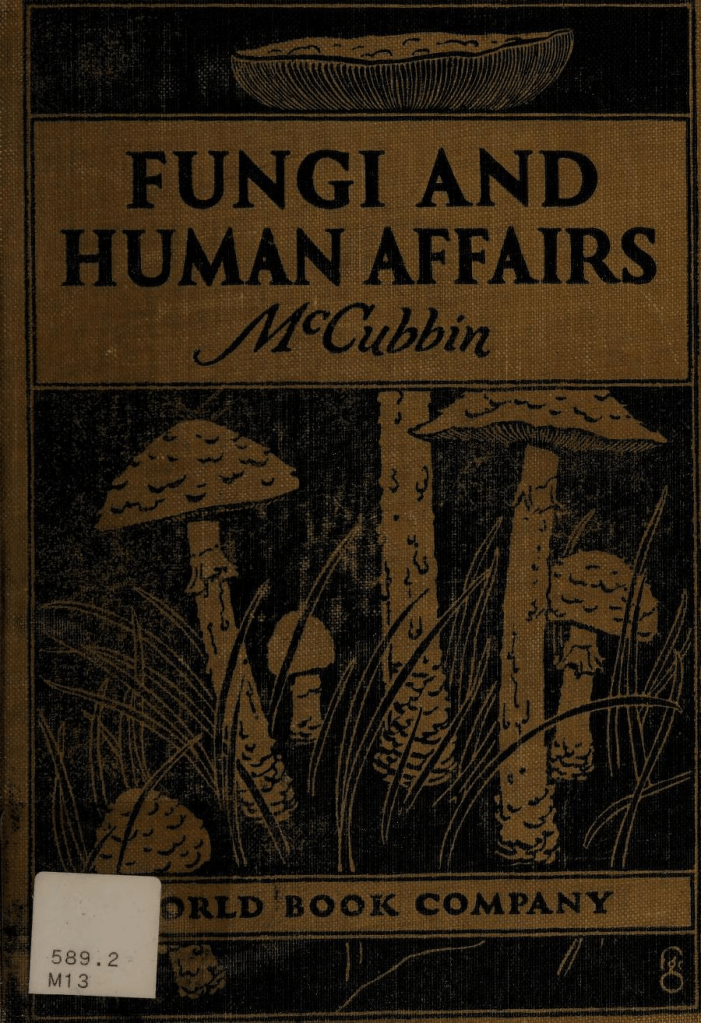
The start of 2023 found the State of New York joining Washington, Colorado, California, Oregon, and Vermont as a state that permits human composting. Pretty great! Better for the earth. More wholesome. Nice for the fungi.

Now, despite the fact that humans have been putting bodies in the ground regularly for -oh, I dunno – over 100,000 years, there’s scant history of using human remains as an agricultural resource. Compost Magazine (yes, really), found this quote from Plutarch observing the aftermath of battle (via Agricultural History magazine):

They say that the soil, after the bodies had rotted and the winter rains had fallen, was so fertilized and saturated with the putrefied matter which sank into it, that it produced an unusual crop the next season.

Greeks weren’t the only ones to take note, the Arabs did as well. Ibn al-‘Awwām wrote the Book of Agriculture back in the 12th century or so. He too noted that “blood has prodigious virtue to revive some trees and plants” – not getting too specific about what sort of blood we’re talking about.

Of a grimmer nature is the write-up from an 1822 edition of London’s Gentleman’s Magazine:

The Nautical Register says, that “It is estimated that more that a million of bushels of human and inhuman bones were imported last year from the continent of Europe, into the port of Hull. The neighborourhood of Leipsic, Austerlitz, Waterloo, and of all the places where, during the late blood war, the principal battles were fought, have been swept alike of the bones of the hero, and the horse which he rode. Thus collected from every quarter, they have been shipped to the port of Hull, and thence forwarded to the Yorkshire bone-grinders, who have erected steam-engines and powerful machinery for the purpose of reducing them to a granulary state. (…) The oily substance of the bone gradually evolving as the bone calcines, makes a more permanent and substantial manure than almost any other substance – particularly human bones.

With all this in mind, it’s nice to see the idea of human composting as a return to earth in a positive sense, bringing about new life. As long as you don’t have Ebola or tuberculosis, you too can become plant food! While still very much a niche industry, I think it’s a path worth pursuing. It’s more environmentally friendly than other methods – the carbon emissions from cremation are terrible, and the embalming chemicals in a buried body are good for nothing but preserving the body (and bad for just about everything else). Plus, what a nice “full circle” way to wrap up. 

I’m still hoping for a sky burial (oh to be interred in an oxymoron…), but this is a good plan(t) B.