
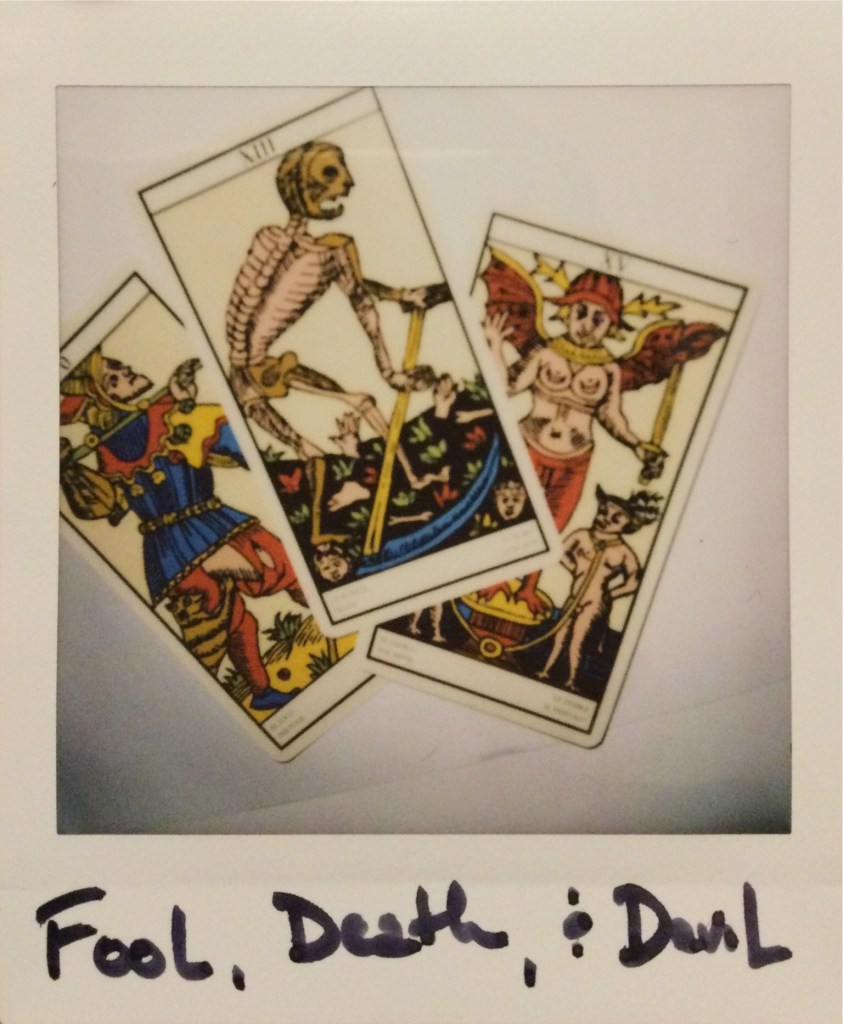
Talk to anyone who knows anything about divination, and you’ll hear that death gets a bad rap. In dreams, in omens, in Tarot – Death doesn’t mean Death (hoping you’ll breathe easy).
You can find many novice guides to the tarot talking about misunderstood cards, particularly the Fool (who, being a fool, has to be misunderstood), the Devil (I mean, evil, hard to spin that one), and Death.
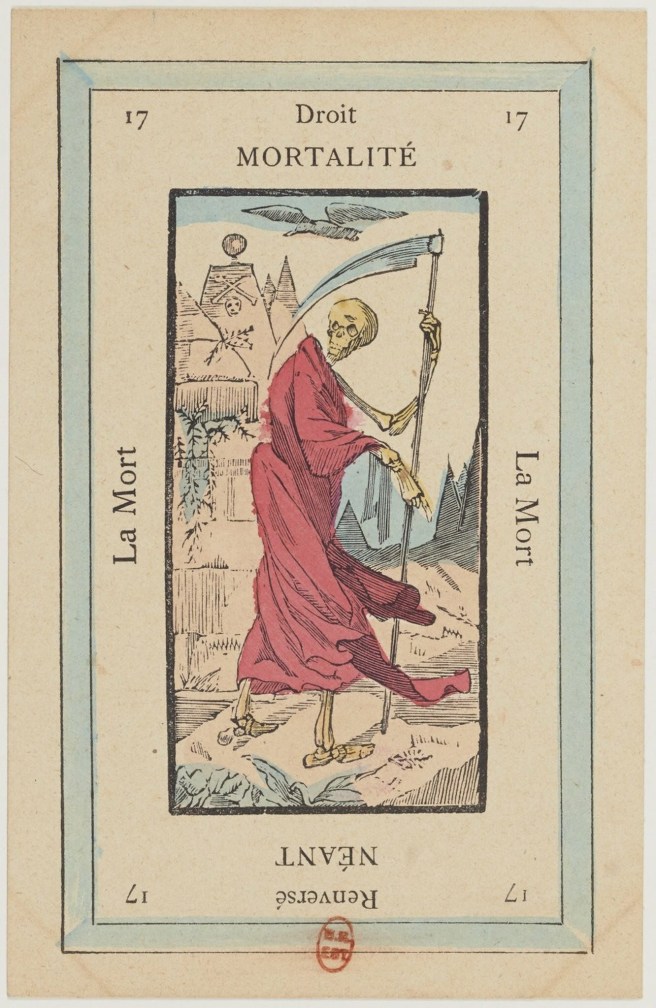
Death, we are assured, simply means some major change is coming, so just calm down. But if death doesn’t signify death, which card does? It better not be the Hierophant.
More importantly, this misinterpretation is at the wrong stage. The misinterpretation of the card called “Death” to signify death seems pretty reasonable (sometimes, a cigar is just a cigar). It’s only a problem because death is immediately associated with negative thoughts.
“Don’t worry, that doesn’t mean what you think it does”
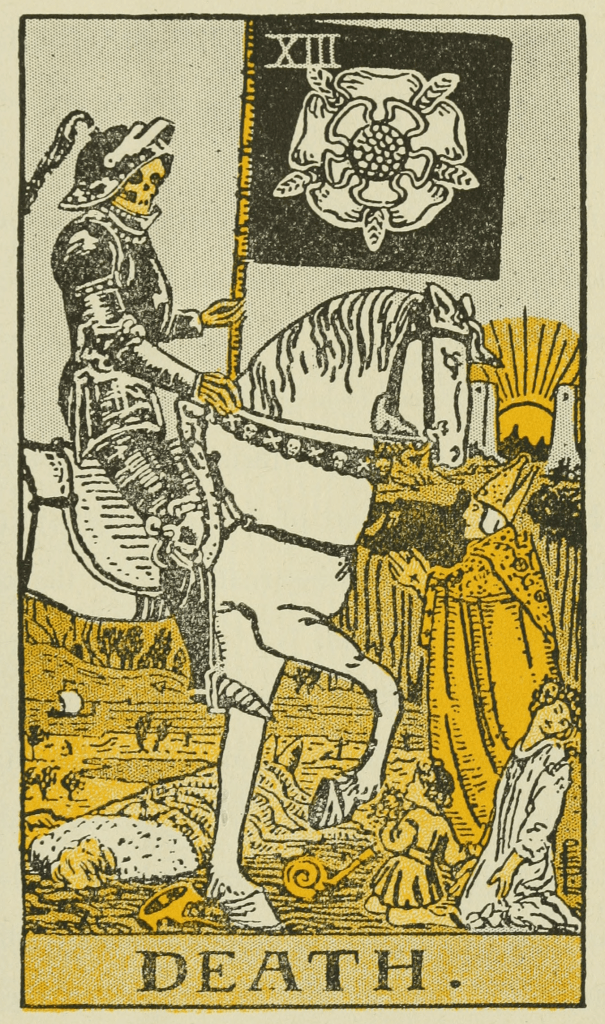
To be fair, death is change. And in some interpretations it could be considered simply a sign of change. But using various interpretive tools to talk death out of being DEATH is hardly helpful. It is important to get out of the mindset that death is some sort of aberration that is best ignored.
That death card should be a chance to genuinely consider death. I mean – death is the most assured thing in any future, whether the cards say so or not.

Try turning the whole interpretation on its head – When we encounter real death, it doesn’t need to simply be the end. It’s a sign of things changing, as they inevitably do.
Death is change. Also, death is death. Change, however need not be death.
 Death Becomes You